








2027 NWFA Industry Outlook – Optimism Despite Uncertainty
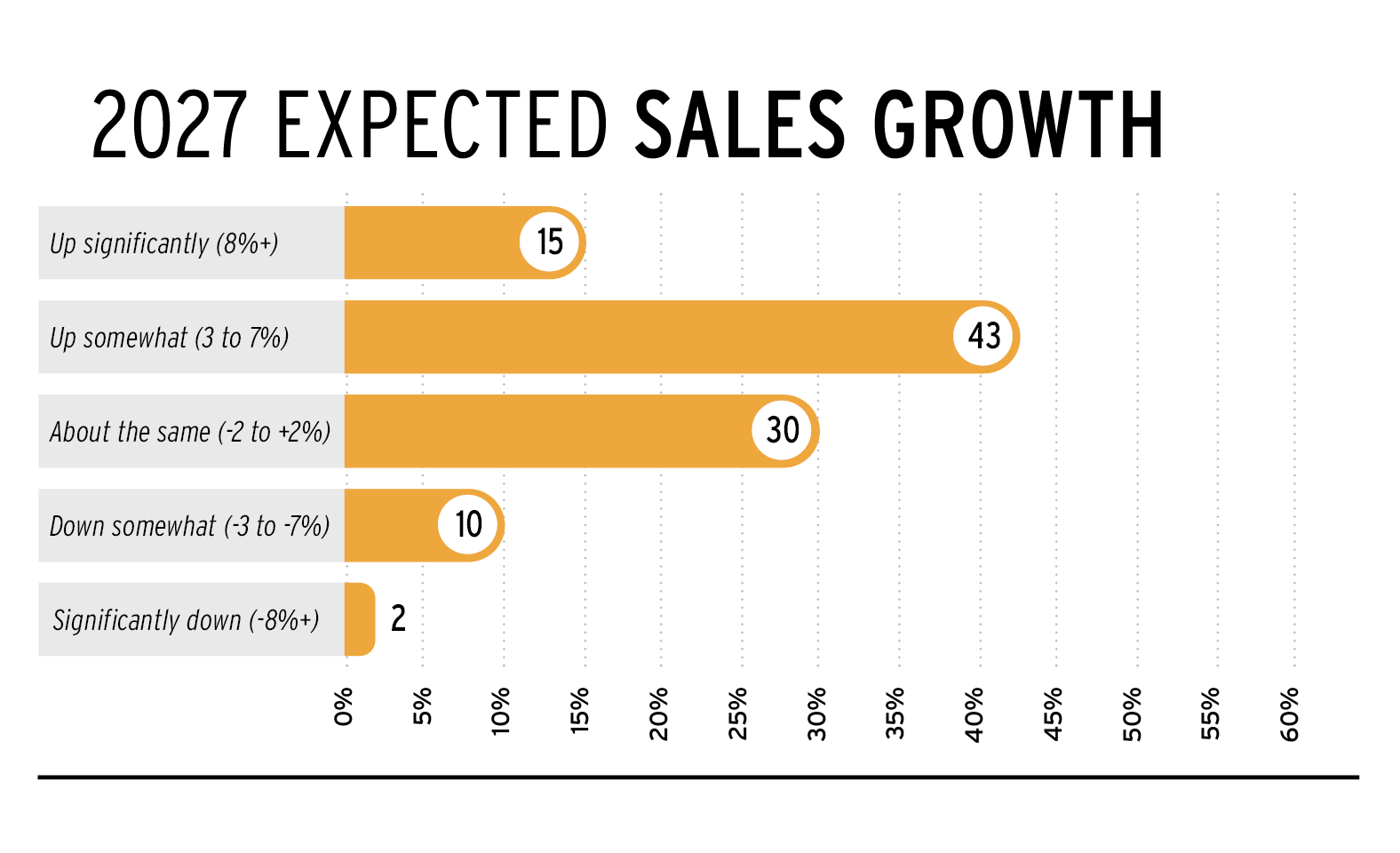
 Despite a housing and remodeling market that continues to face economic headwinds, the wood flooring industry is heading into 2027 with cautious optimism. Fifty-eight percent of respondents to the National Wood Flooring Association (NWFA)’s annual Industry Outlook survey expect sales to grow in 2027, while 30 percent anticipate sales will remain on par with 2026.
Dan Natkin, CEO of Essex Finishing, believes the market is poised for a reset. “At some point in the next 18 to 24 months, we’re going to see kind of a release of spending.”
That optimism comes despite continued weakness in the broader housing and remodeling markets. The Leading Indicator of Remodeling Activity (LIRA) from the Joint Center for Housing Studies of Harvard University, released in July 2026, projects that home improvement and repair spending will continue to lose momentum through mid-2027.
LIRA, which provides a short-term outlook for national spending on improvements and repairs to owner-occupied homes, projects year-over-year growth of just 0.5 percent in the second quarter of 2027. That would mark a third consecutive quarter of slowing growth, as reduced housing starts and broader economic uncertainty weigh on remodeling activity.
Conditions remain challenging on the new-construction side. Elevated interest rates, high land costs, and persistent inflation continue to concern homebuilders. Builder confidence in the market for newly built single-family homes fell two points to 34 in July, according to the National Association of Home Builders (NAHB)/Wells Fargo Housing Market Index.
Even with those pressures, NWFA members see opportunities ahead. They shared how rising costs, changing consumer preferences, and evolving market conditions are shaping their expectations and strategies for 2027.
TOP BUSINESS CHALLENGE: RISING COSTS
While tariffs were a major concern last year, this year’s responses reveal a broader mix of cost pressures. Material prices, transportation expenses, labor shortages, and ongoing economic uncertainty continue to pressure businesses across the industry.
At the time of the survey, 42 percent of respondents identified material cost increases as one of their biggest business challenges, closely followed by rising transportation and logistics costs at 41 percent. Labor shortages ranked third at 29 percent, followed by competition from alternative flooring products at 27 percent and pricing pressure at 23 percent.
Economic uncertainty is adding to those pressures. Natkin pointed to tariffs, geopolitical conflict, and persistent inflation as factors making consumers hesitant to invest. “All of this chaos has led to a lack of consumer confidence in the economy.”
Although concern about tariffs has eased from last year – just 19 percent of respondents named tariff uncertainty as a top challenge this year – they continue to influence purchasing strategies and long-term planning. Jeremy Evans, sales leader at Rock Solid Hardwoods, said his company relies on imported wood for its European white oak products, leaving it exposed to ongoing tariff-related cost pressures.
For some businesses, that uncertainty has become something to plan around rather than wait out. Brennan Swing, global marketing director of Home Legend, said companies should focus on building more flexible supply chains, including diversifying sourcing and maintaining consistent quality across manufacturing locations. “The tariff uncertainty is something you have to plan for, rather than expect to resolve.”
The cumulative effect of rising costs is significant. More than 71 percent of respondents said
higher operating costs have had at least a moderate negative impact on their businesses during the past 12 months, creating noticeable pressure on operations or pricing while remaining manageable. About 22 percent said rising costs significantly have reduced margins, delayed projects, or hurt sales.
Those pressures are influencing plans for 2027, with roughly a third of respondents saying they intend to evaluate alternative supply sources to mitigate business and pricing challenges.
NATURAL LOOKS AND LARGER FORMATS LEAD TRENDS
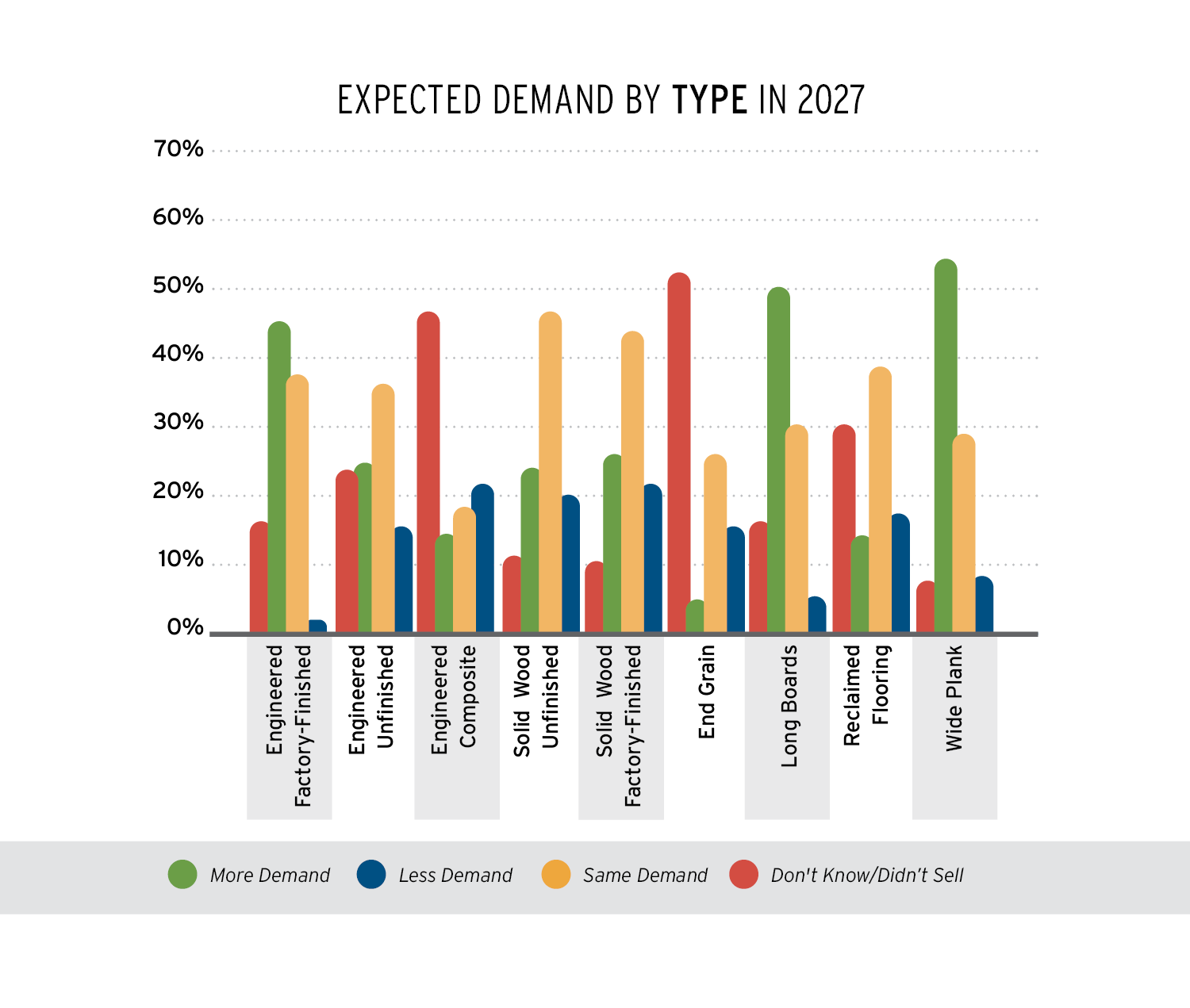
Consumer preferences continue to shift toward natural aesthetics and larger formats heading into 2027. Natural wood colors led the trends identified by respondents, with 61 percent expecting increased demand, followed by wide plank flooring at 54 percent, longer boards at 50 percent, matte sheen at 48 percent, and lighter color tones at 47 percent.
At the same time, some of the color trends that defined the market in recent years continue to fall away. Seventy-five percent of respondents expect demand for gray tones to decline in 2027, while 55 percent anticipate declining demand for red tones.
Together, the findings point toward a warmer, more natural aesthetic, with consumers gravitating toward wood’s inherent character rather than heavily colored finishes. Maxx Rapaport, vice president of Rapaport Wood Floors, sees honey and amber tones gaining traction as the market moves away from cooler, gray-heavy palettes. He noted that lighter finishes still have staying power even as warmer colors emerge. “I think whites, a little Nordic, and a little whitewash are always going to be popular for us.”
White oak also remains a standout, with 52 percent of respondents expecting demand to increase in 2027. Format preferences are evolving alongside color trends. One survey respondent serving the New York City market said customers are “consistently moving away from traditional narrow strips and toward 5” and wider,” with white oak, light natural tones, and matte finishes dominating specifications.
Factory-finished engineered flooring is gaining ground as well, with 45 percent of respondents expecting increased demand. Natkin views the rise of engineered flooring as a long-term market shift rather than a challenge for the industry. “I don’t see engineered as really a challenge to the industry. It’s just an industry dynamic.”
Decorative installations are another area to watch. Robert McNamara, vice president of marketing and sales at Sheoga Hardwood, said his company is seeing growing interest in herringbone, chevron, and parquet as homeowners and designers seek more distinctive, high-end installations.
“The vast majority of our distributors say that almost all of their quotes right now have some kind of herringbone or chevron in it,” McNamara said. “That train is leaving the station.”
WOOD-LOOK PRODUCTS PRESSURE REAL-WOOD SALES
Competition from wood-look products such as LVT, WPC, and laminate continues to affect real-wood flooring sales, with 61 percent of respondents reporting a negative impact.
Price remains a major factor. One respondent said the rising cost of housing is pushing even some higher-end projects toward LVT as builders and homeowners look for savings late in the construction process.
At the same time, some members said the higher end of the market remains less vulnerable to wood-look alternatives, where consumers place greater value on customization, longevity, and the ability to refinish a floor.
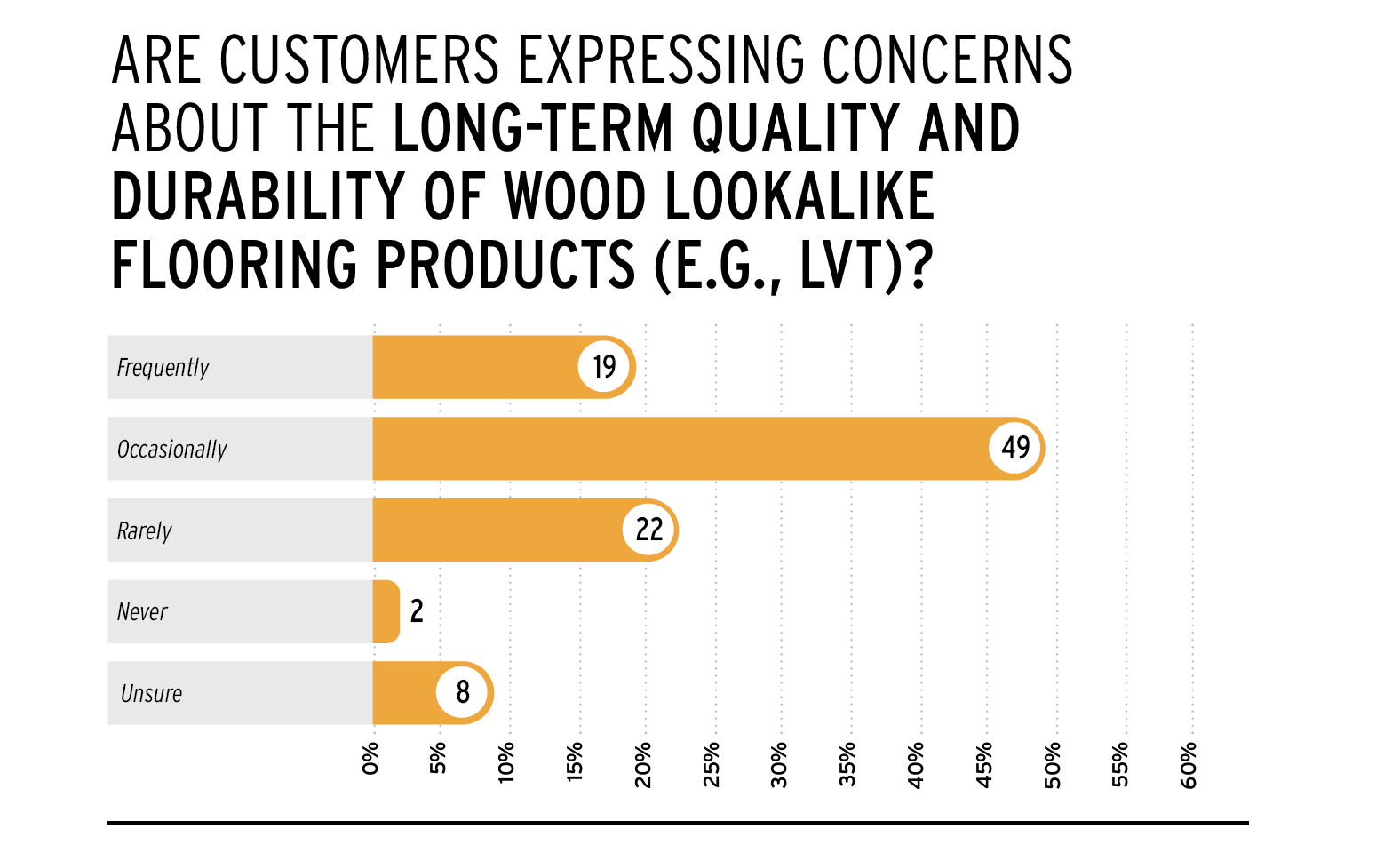
There are signs that consumers are questioning the long-term performance of wood-look products. About 68 percent of respondents said customers express concerns occasionally or frequently about quality or durability. One respondent said some consumers have begun to shy away from plastic flooring because of concerns about its quality and lack of versatility. Those findings may give real wood an opportunity to compete on durability, longevity, and value.
CUSTOMER EXPECTATIONS AND EDUCATION
Managing customer expectations remains an industry-wide challenge. Fifty-one percent of respondents identified customer expectations as a top claims-related issue, making it the most cited concern. Moisture-related claims followed at 44 percent.
Natkin said that education available to professionals through NWFA should focus on setting
realistic expectations around performance, maintenance, longevity, and refinishing rather than competing on marketing claims. “Stop buying into the hype of waterproof. Guide the consumer through the process. Explain why our floor doesn’t need to be waterproof and yes, it can be refinished.”
Nate Woolwine, owner of Timeless Flooring and Design, sees customer awareness as one of the industry’s biggest opportunities. While contractors and other industry professionals may understand the value of NWFA certification, he said many homeowners don’t recognize the difference that proper training and certification can make in installation quality and long-term floor performance.
That education extends to industry professionals as well. Rapaport said participation in NWFA provides access to knowledge and experience that can help members avoid costly mistakes. “Longevity matters in this trade because experienced people have already made mistakes, learned from them, and can help others avoid the same problems,” Rapaport said. “Our industry values that experience.”
USE OF AI TOOLS IN BUSINESS
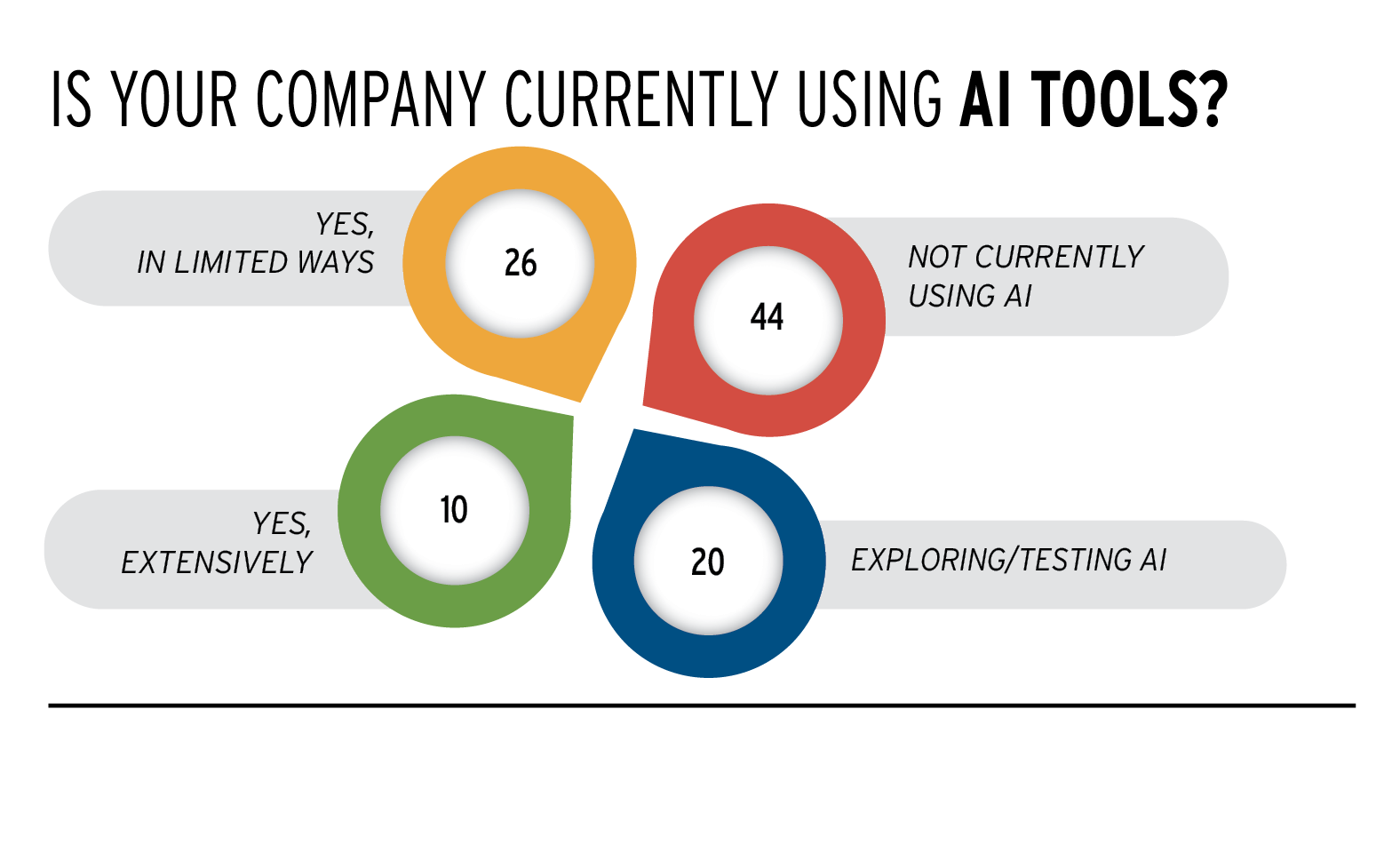
AI has not become standard across the wood flooring industry yet, but more than half of respondents are either using it or exploring potential applications. Forty-four percent aren’t using AI at all. About 10 percent are using AI extensively.
For those who are using it, top use cases are marketing/content creation (43 percent) and data analysis/ reporting (31 percent). About a quarter also reported using AI for sales and design visualization. Other uses include project descriptions, floor visualizations, and rendering work.
“As a small business, AI functions primarily as a productivity tool, allowing more time to be spent on craftsmanship, customer service, and fieldwork,” said one respondent.
Swing said AI is becoming a strategic business tool rather than simply a content generator for his company. Home Legend uses AI to accelerate market research, identify trends, streamline workflows, and shorten the time between recognizing customer demand and bringing new products to market. He emphasized that AI is most effective when it enhances human expertise rather than replaces it.
“Use AI as a force multiplier,” Swing said. “My team can do the work of a much larger organization by being intentional about where we apply AI.”
For members already adopting the technology, the emphasis appears to be less on replacing people and more on using AI to increase the capacity of existing teams.
CONTRACTORS
For full-year 2026, more than half of contractors expect sales to increase, with 34 percent
projecting moderate growth and 19 percent anticipating significant gains. Expectations remain positive heading into 2027, with 56 percent forecasting growth. However, contractors largely are anticipating modest gains next year: 53 percent expect sales to rise between 3 percent and 7 percent, while just 3 percent foresee growth of 8 percent or more.
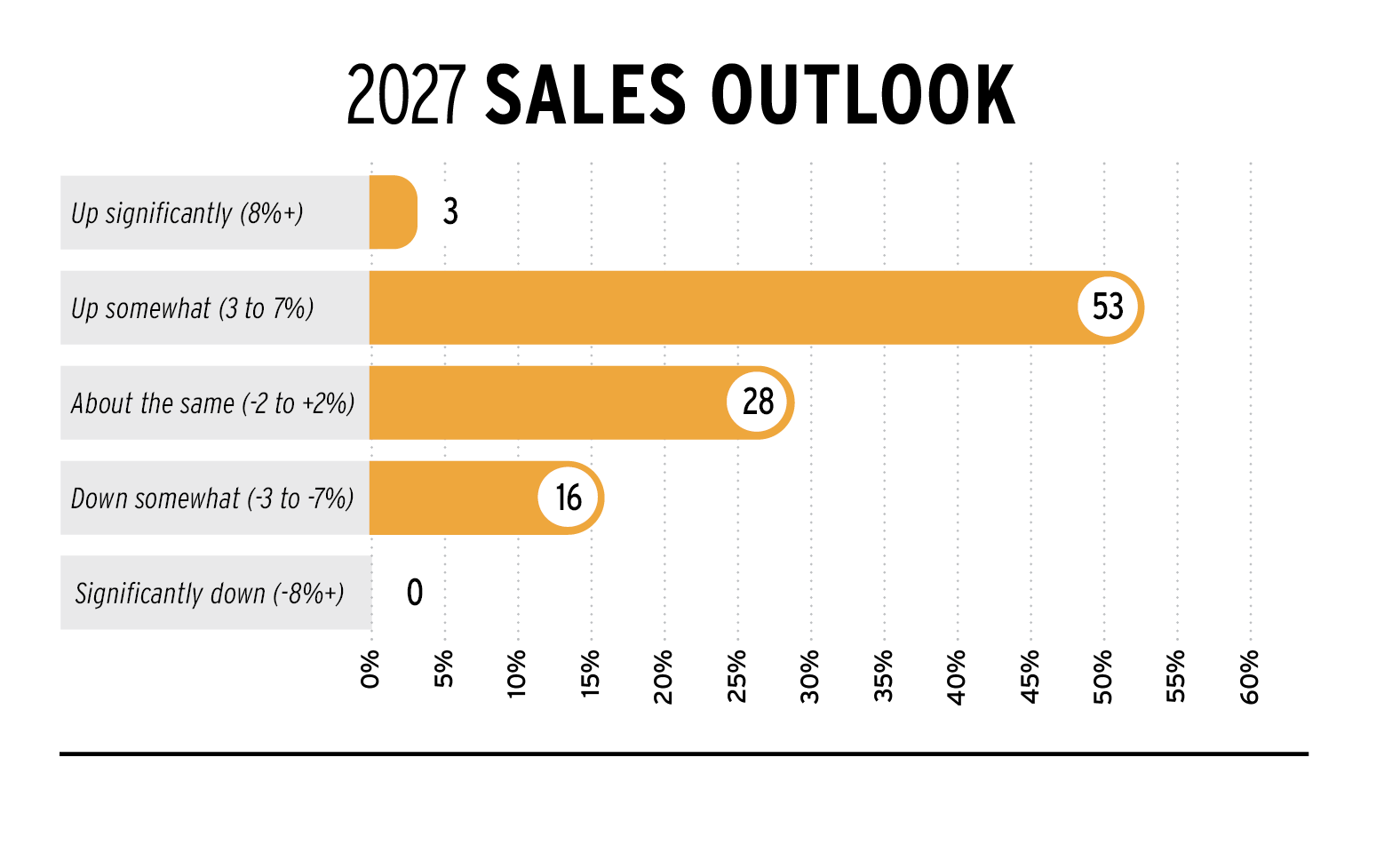
Contractors pointed to market volatility, inflation, broader economic conditions, and rising costs as factors continuing to pressure sales and margins.
Maxx Rapaport, vice president of Rapaport Wood Flooring, said the middle of the market has been squeezed hardest by rising costs and competition. “The middle is really tough.”
To address cost pressures, Rapaport said his company is itemizing estimates and explaining
insurance, material, and other costs so customers understand what is driving the final price.
“Transparency is what we’re leaning into.”
Nate Woolwine, owner of Timeless Flooring and Design, is taking a similar approach, although fluctuating prices can make costs difficult to project.
Woolwine said competition from uncertified installers adds another challenge. As an NWFA Certified Installation Professional, Sand and Finish Professional, and Wood Flooring Inspector, he often finds himself explaining why proper installation, training, and premium materials command a higher price.
“I have the knowledge, education, and I like to use only premium products,” Woolwine said. “I have to make the customer aware of why I cost more.”
Installation trends point to a diverse mix of products and project types. In 2026, contractors reported working with unfinished solid (97 percent), factory-finished solid (90 percent), factory-finished engineered (72 percent), and unfinished engineered (65 percent). Decorative installations also remain part of the mix, with 59 percent reporting work involving parquet, herringbone, or chevron.
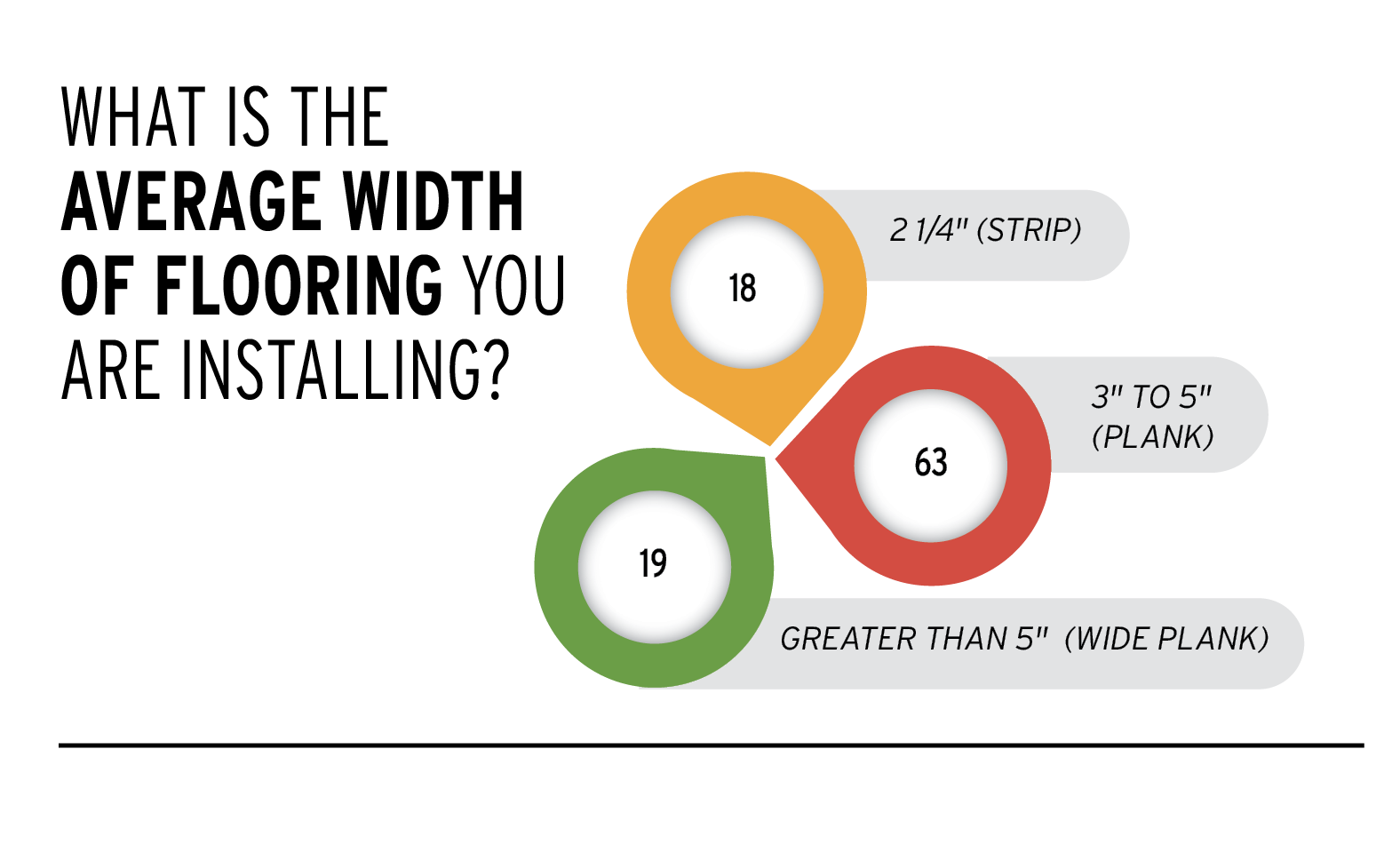
In terms of format and finish, 63 percent reported working with 3” to 5” planks, while 67 percent cited water-based finishes. Nail-down was the most reported installation method.
Pricing remains contractors’ biggest obstacle when selling wood flooring. Respondents also pointed to logistics and lead times, installation and maintenance costs, limited customer knowledge, and sampling demands as barriers to closing sales.
That price sensitivity is reflected in what contractors say customers prioritize: durability and
price tied as the most cited features, each selected by more than 80 percent of respondents.
Asked how they plan to become more competitive through the second half of 2026 and into 2027, contractors offered a wide range of strategies, including education, increased marketing, greater operational efficiency, expanded product and service offerings, hiring, and longer financing terms.
Technology is part of that strategy for some. One contractor said the company plans to implement AI for everyday tasks, freeing up more time to focus on clients.
DISTRIBUTORS
Expectations are mixed for distributors in 2026. Nearly one-quarter of respondents expect a moderate increase in sales, while an equal share anticipates sales will remain unchanged or decline moderately.
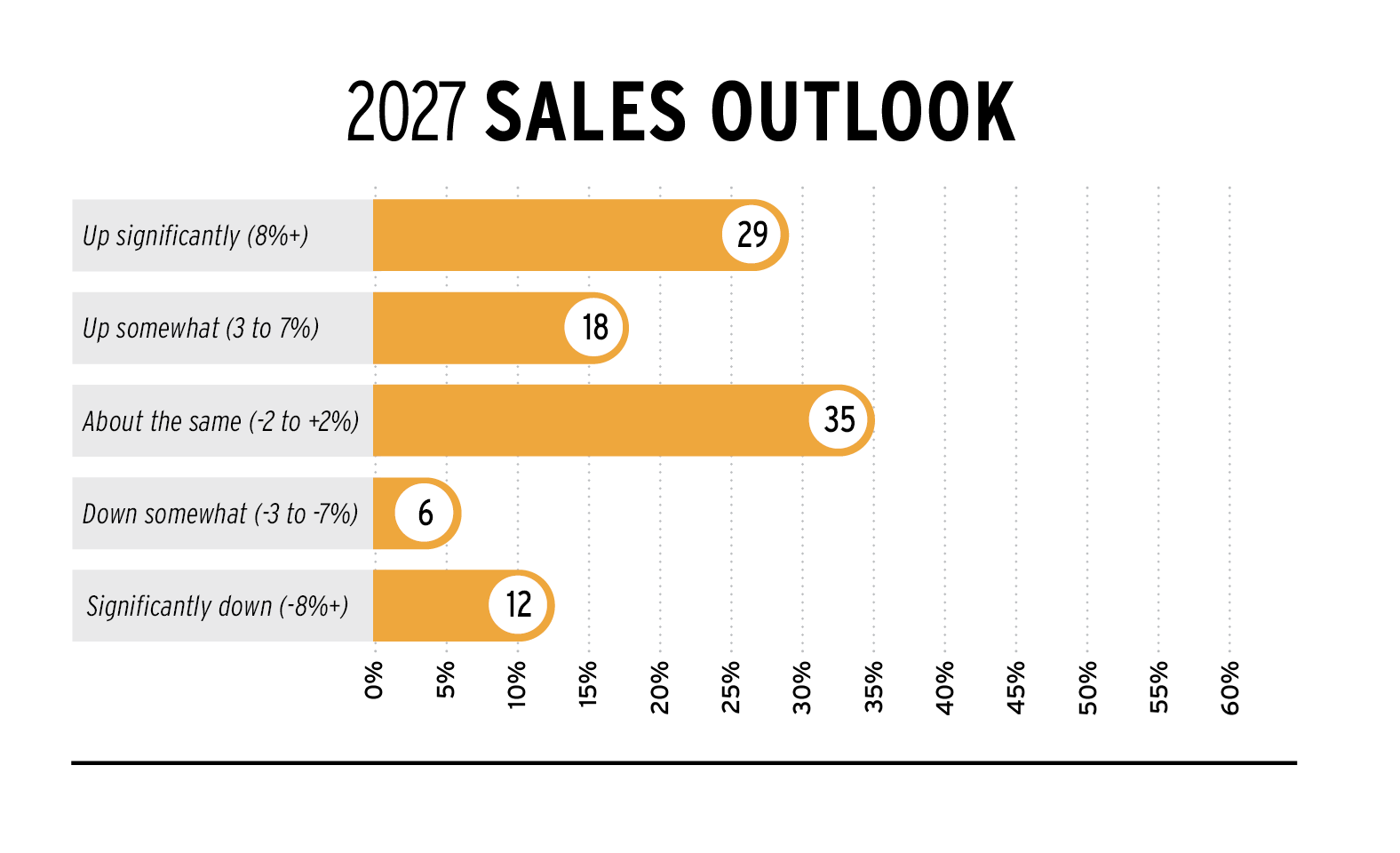
The outlook improves heading into 2027, when 47 percent expect wood flooring sales to increase. Still, nearly 12 percent anticipate a significant decline.
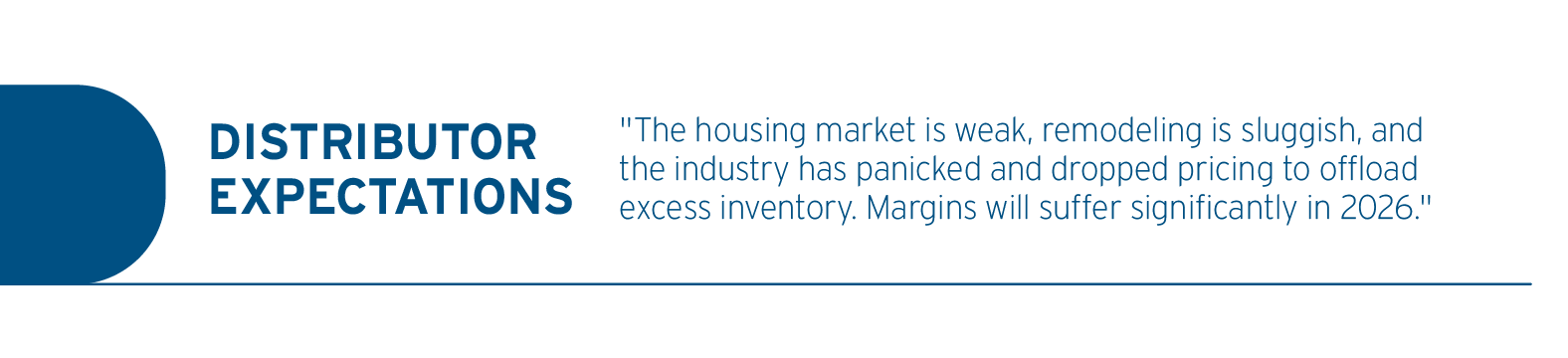
One distributor pointed to weakening housing and remodeling activity as a reason for lower
expectations. “The housing market is weak, remodeling is sluggish, and the industry has panicked and dropped pricing to offload excess inventory. Margins will suffer significantly in 2026.”
Jeremy Evans, sales leader at Rock Solid Hardwoods, said lower- and middle-income customers are pulling back on flooring spending, with hesitation extending even into more affluent segments of the market.
For Evans, the challenge isn’t product quality but reaching customers who recognize its value. Pricing remains top of mind for many distributors and doesn’t show signs of relenting.
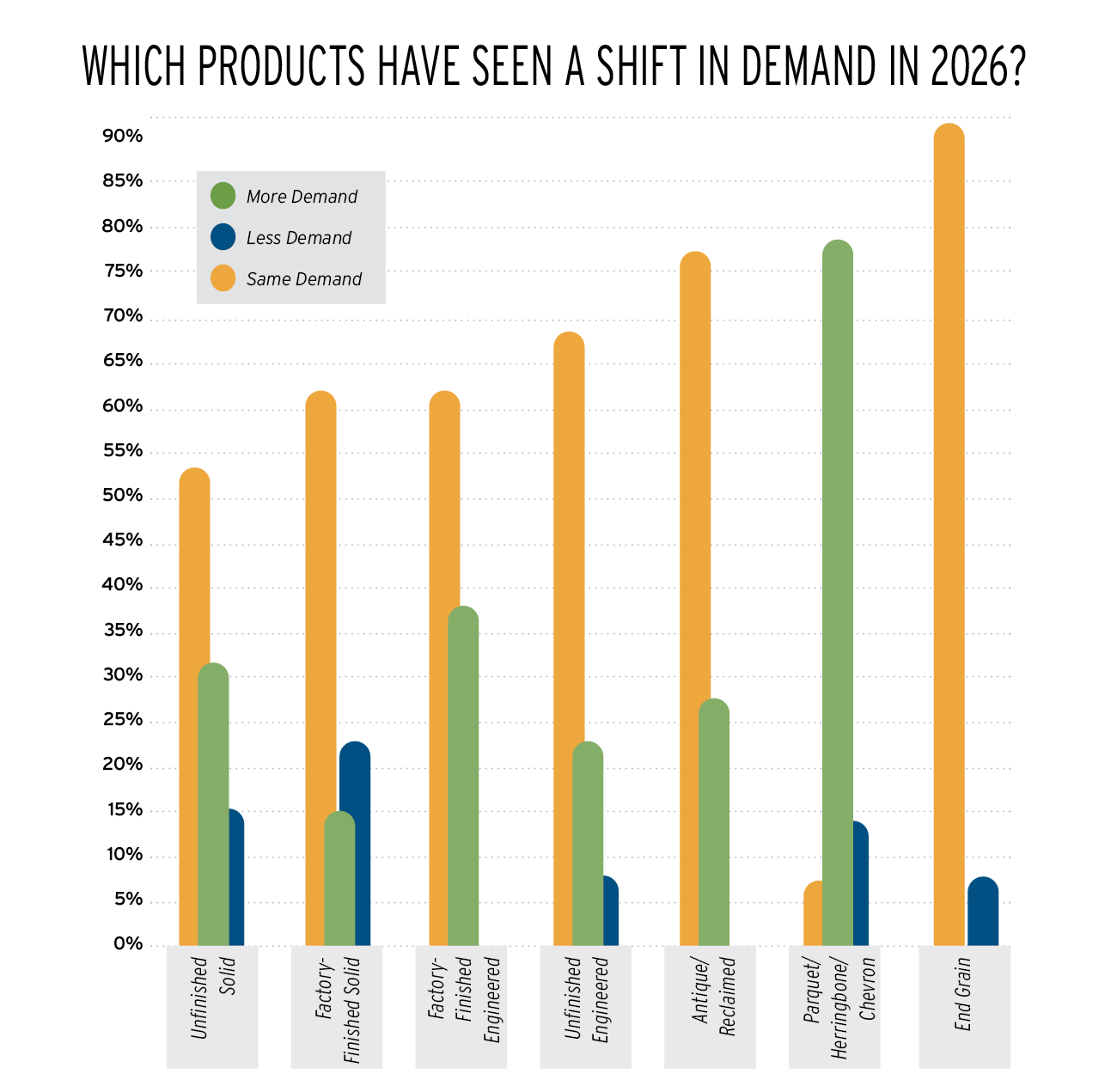
Product preferences are shifting. Nearly 79 percent of distributors reported increased demand for parquet, herringbone, and chevron in 2026, pointing to continued interest in more decorative and design-driven wood flooring.
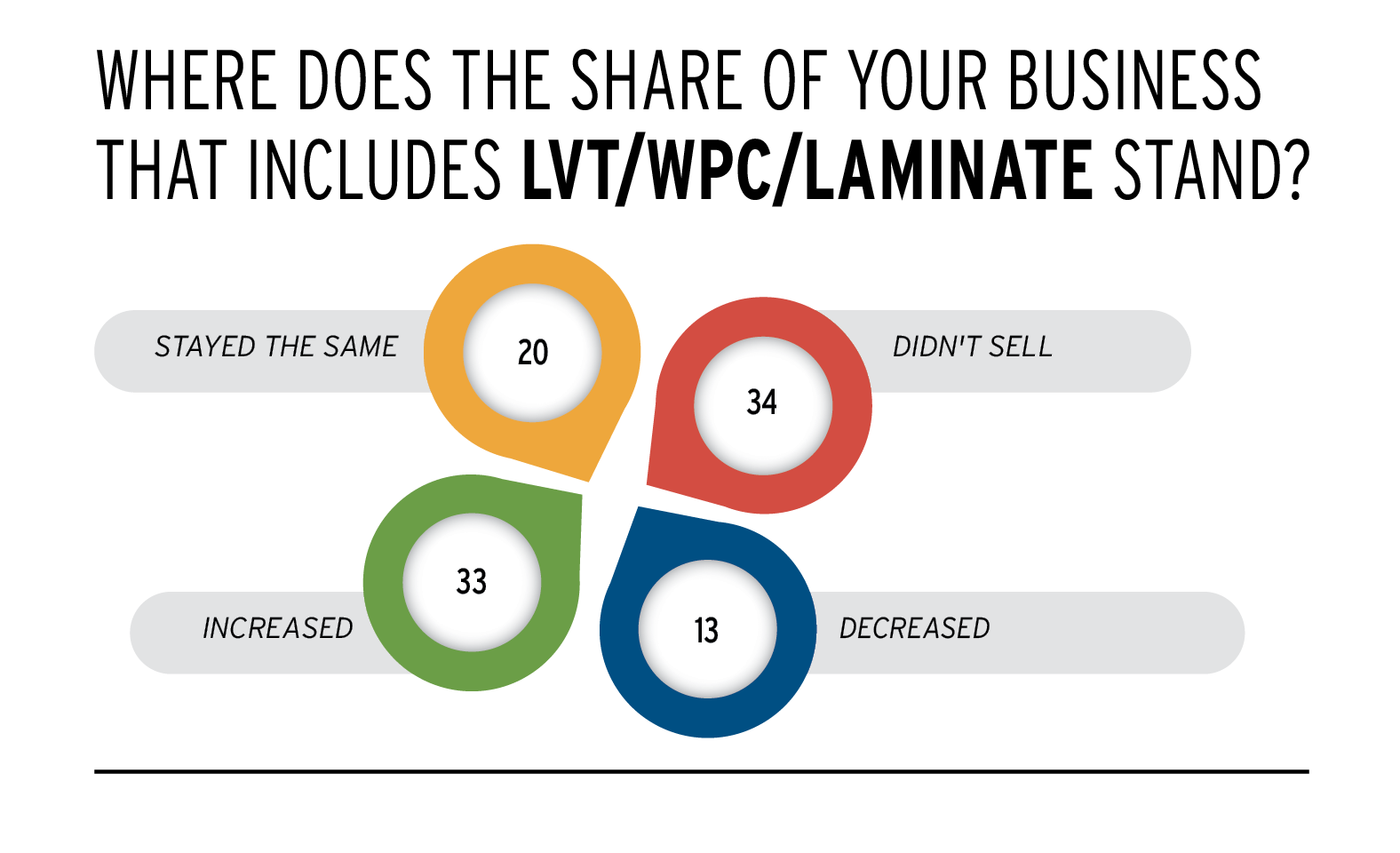
Distributor involvement in non-wood flooring remains mixed. More than a third said the share of their business coming from LVT, WPC, or laminate has increased, while roughly a third said they don’t sell non-wood flooring products at all.
Asked how they plan to remain competitive, distributors cited expanding product offerings,
maintaining strong inventory positions, adding pickup locations, and growing their sales teams. For some, inventory availability is a key advantage in serving customers quickly. One respondent said the company plans to accept lower margins to drive greater volume.
Even as distributors look for new avenues for growth, ecommerce remains limited: More than 82 percent said they do not sell online through an ecommerce website.
MANUFACTURERS
Manufacturers’ expectations are measured for full-year 2026 results. About 54 percent anticipate sales growth for the full year, including 19 percent expecting significant gains and 35 percent forecasting moderate growth. The remaining 46 percent expect sales to stay about the same or decline.
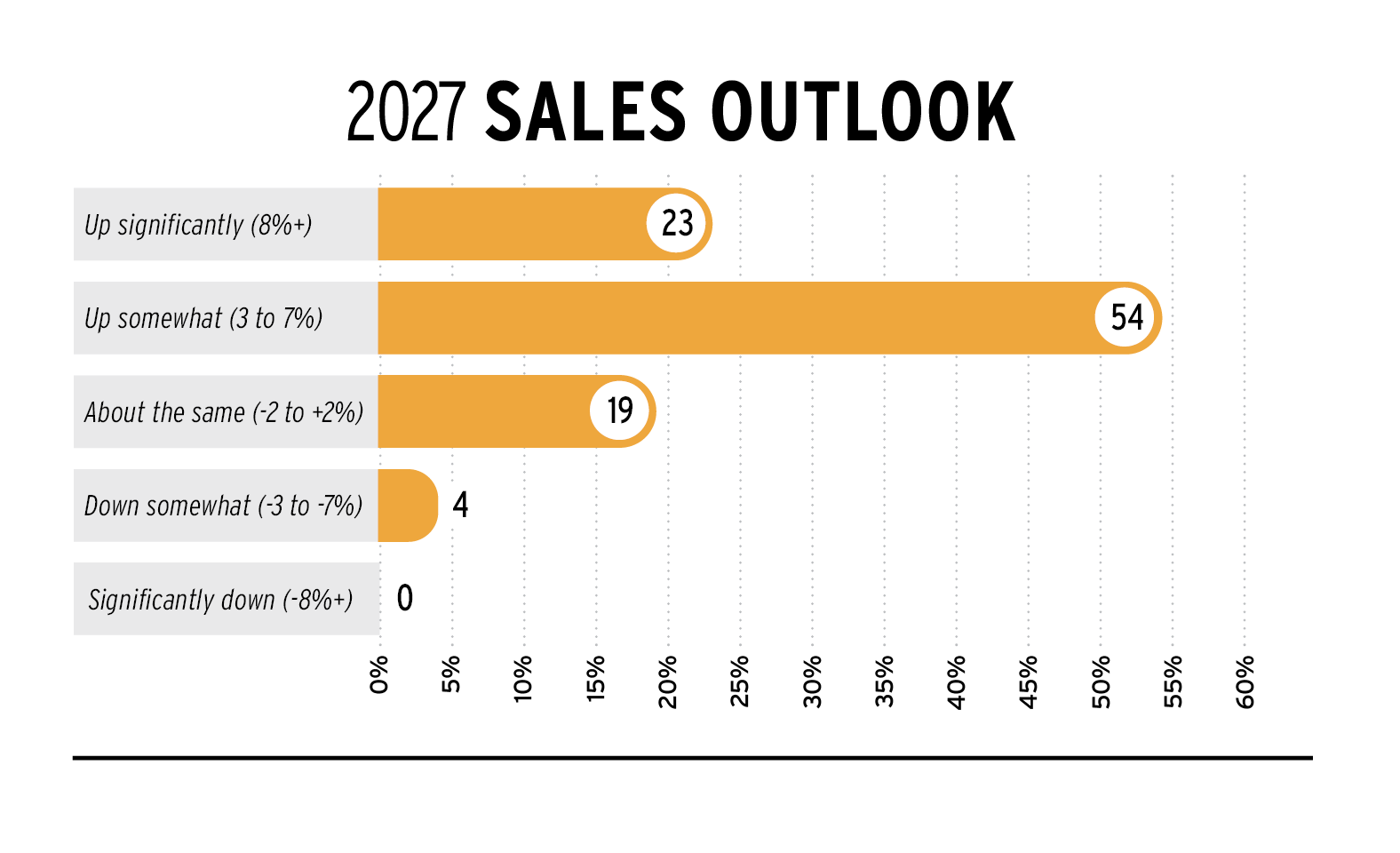
Manufacturers are considerably more optimistic than any of the segments about 2027. Nearly 77 percent expect wood flooring sales to increase, including 54 percent anticipating moderate growth and 23 percent expecting significant gains.
Respondents attributed their more cautious 2026 expectations to inflation, higher shipping costs, geopolitical uncertainty, and broader economic conditions. One manufacturer said the slow pace of fall 2025 carried into 2026 and that macroeconomic indicators have yet to suggest a meaningful recovery.
Sixty-eight percent of NWFA manufacturers reported price increases in 2026, while 60 percent expect additional increases in 2027. Some respondents cited rising material costs, freight expenses, labor costs, and supply constraints as contributors.
Dan Natkin, CEO of Essex Finishing, said higher interest rates and slowing new-home construction have prompted builders to look for ways to reduce construction costs. As material prices have increased across categories, he said some builders are substituting lower-cost flooring products to keep homes affordable and help buyers qualify for mortgages.
“They’re putting more base materials into the home and then using any incentive dollars that they would have been using to buy down their rates, just to get consumers into the house.”
Manufacturers are not responding to higher costs solely through price increases. Robert McNamara, vice president of marketing and sales at Sheoga Hardwood Flooring, said increases in white oak, walnut, and Baltic birch have affected production costs, but the company also is looking internally for ways to absorb those increases.

“In some areas, we have to pass it on to the end-user, and in other areas, we improve our
efficiencies and invest in manufacturing, so we don’t have to pass it along.”
Manufacturers continue to invest in capacity and automation despite market uncertainty. Fifty-six percent of manufacturers said their companies have adopted automation in their manufacturing operations.
Examples include:
• Moulders
• Air compressors
• Rip saw automation
• Defecting, packaging, and profiling automation
McNamara said Sheoga recently broke ground on a 100,000-square-foot addition to its facility and is investing in equipment to increase production capacity. “We are investing in infrastructure and equipment to speed the process along. We also have bought some equipment where we’re going to more than double our capacity on engineered wood flooring.”
But automation hasn’t eliminated the need for skilled workers. “Even though we’re using high-tech equipment, we rely on our employees who are touching every linear foot to be our eyes and ears in quality control,” McNamara said.
Investment isn’t limited to the production floor. Manufacturers also are rethinking how they
develop, position, and support products. Brennan Swing, global marketing director of Home Legend, said flooring manufacturers have an opportunity to differentiate themselves from their competition by emphasizing transparency over marketing claims. As consumers become more skeptical of terms such as “waterproof,” “pet-friendly,” and “scratch-resistant,” he said brands need to set realistic expectations about product performance.
He said that approach also is shaping product development, with greater emphasis on identifying unmet consumer needs and supporting new products with education, content, and sales tools rather than simply bringing another set of SKUs to market.
Looking toward 2027, manufacturers described strategies for remaining competitive, including improving operational efficiency, diversifying product offerings, managing inventory and labor more carefully, finding more cost-effective products and shipping methods, and strengthening relationships with distributors and retailers.
One manufacturer said the company plans to “continue to improve efficiencies, eliminate operational constraints, and work with distributors/retailers to continue education of the consumer with respect to the benefits of hardwood products.”
Others pointed to stronger relationship-building and more pull-through and push-through marketing as ways to generate demand.
RETAILERS
Retailers reported a mixed but generally stable sales picture. More than a third said wood flooring sales increased moderately in 2025 compared with 2024. Halfway through 2026, 61 percent expect full-year growth.
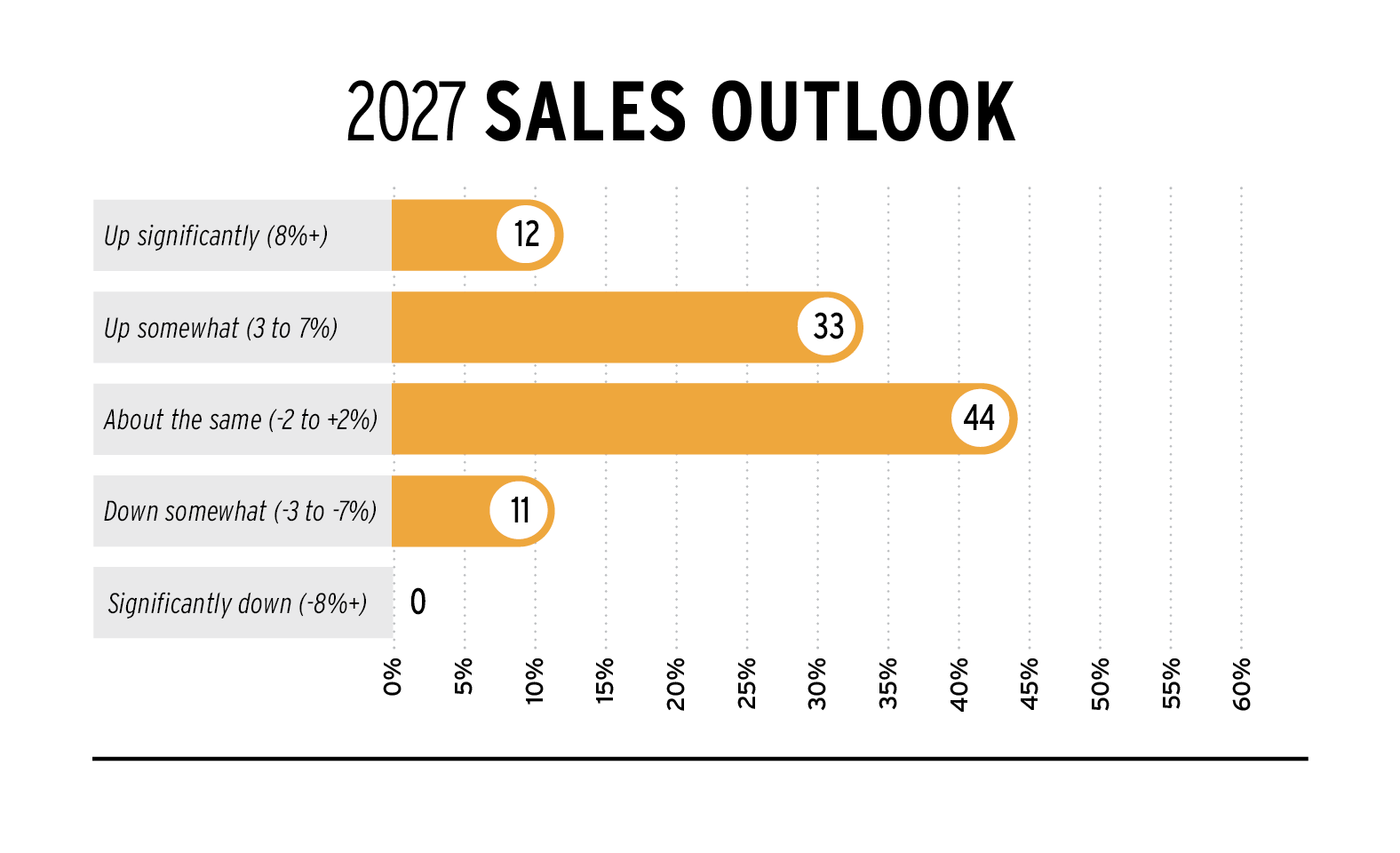
Looking ahead to 2027, expectations remain measured: Most expect either moderate growth (44 percent) or sales to stay the same.
Competition from non-wood flooring remains significant. Among retailers selling both wood and non-wood products, most said wood flooring is growing more slowly or at the same pace as non-wood.
Peter Nazarenko, owner of Planet Hardwood, believes hardwood faces a challenge beyond competition from alternative products: getting consumers to consider the category in the first place. Because flooring is an infrequent purchase, he said most consumers don’t routinely research hardwood until a renovation or replacement project is already underway.
“The only people we’re going to interest are the people who already are looking for flooring,” Nazarenko said. “Hardwood flooring is such a unique product to try to market.”
Another retailer said demand remains heavily influenced by factors retailers can’t control, including interest rates, consumer confidence, housing starts, and builder activity. Tariff
uncertainty has added another layer of difficulty to inventory planning, particularly for businesses sourcing from Canada.
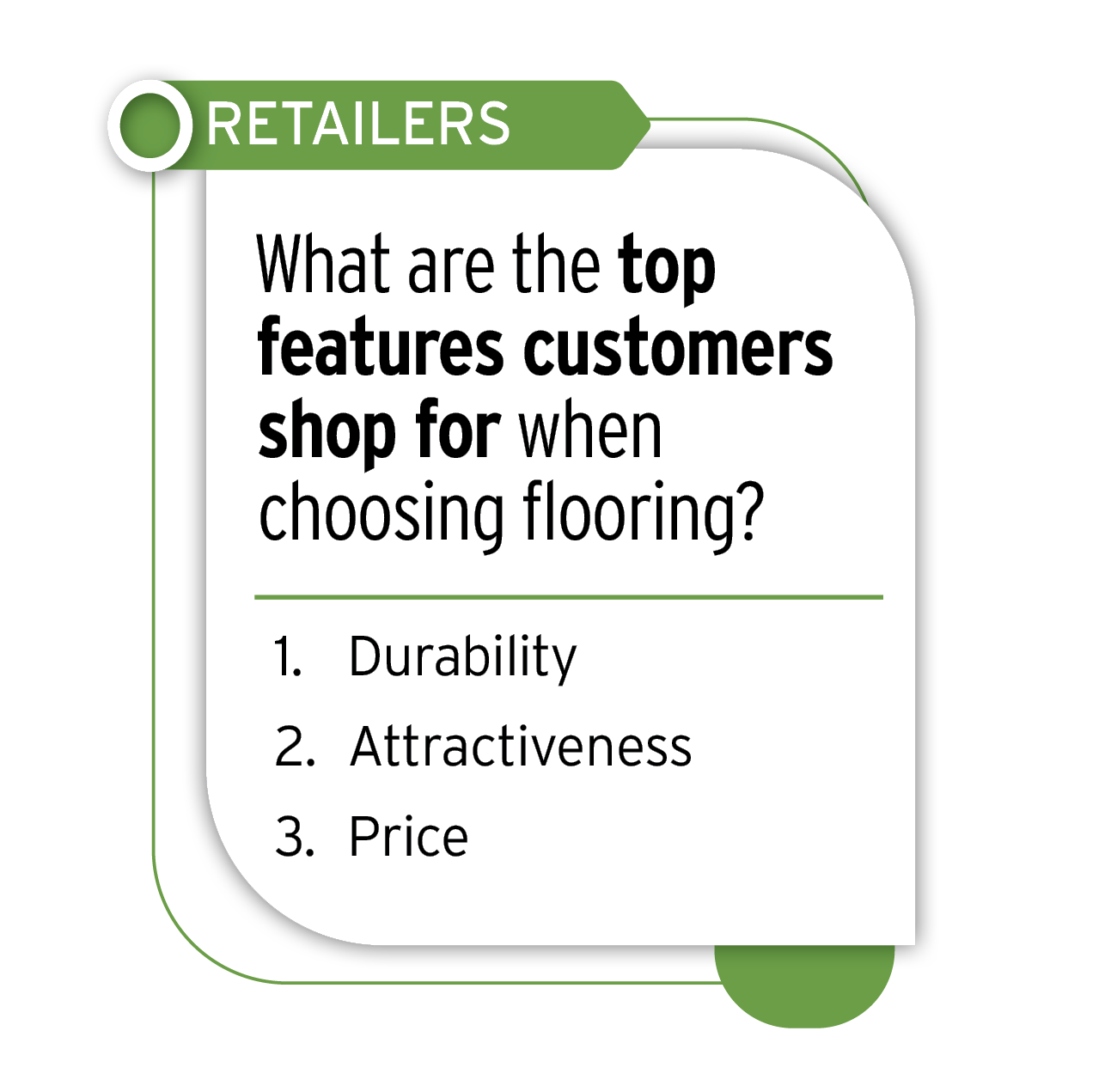
When consumers do enter the market, retailers say three considerations dominate the purchase decision: durability, attractiveness, and price.
Asked how they plan to become more competitive through the second half of 2026 and into 2027, retailers said broader product offerings, extended showroom hours, additional installers, staff training, stronger online presence, and a continued focus on high-quality products and service. One respondent emphasized returning to core remodeling opportunities by helping homeowners “freshen and update what they have already.”
Nazarenko said retailers have numerous paths to growth, from expanding into adjacent home-product categories to adding locations, strengthening their online presence, or increasing installation services. But he cautioned that expansion requires focus.
“Everything takes enough effort that you can’t do it all,” he said. “You lose your focus and you do everything crummy.”
Even as some retailers invest in their online presence, ecommerce remains limited. Most do not sell through an ecommerce website. Nazarenko said the challenge is that hardwood flooring rarely is a simple transaction; it often requires repeated visits, measurements, samples, installation coordination, and follow-up. “Flooring isn’t one trip into the house,” he said. “It’s 40 trips into the house.”
LOOKING FORWARD
Wood flooring businesses are responding to uncertainty by improving what they can control. Almost 47 percent of respondents said they plan to improve processes to become more efficient in 2027. Nearly 38 percent plan to add new product categories, lines, or services, while 35 percent will bring on additional team members.
The industry can’t control mortgage rates, housing turnover, or economic confidence, but
respondents are investing in efficiency, product breadth, people, and sourcing resilience while they wait for broader conditions to improve.
For many, that means preparing now for opportunities that may emerge as housing and remodeling activity eventually strengthens. While few expect 2027 to be without challenges, the survey suggests an industry focused less on waiting for ideal conditions and more on positioning itself to compete in the market it has.
Click here to see the 2027 Industry Outlook Extended Report
Shannon Gayton is part of the team at 3 Aspens Media. In partnership with NWFA, 3 Aspens
Media conducted an online survey of NWFA members and Hardwood Floors magazine readers, interviewed respondents, analyzed results, and produced this report. Contact info@3aspensmedia.com with questions.
