









Walk into a flooring showroom that stops you in your tracks. The lighting is right, the vignettes are considered, the whole experience feels like someone made deliberate choices. Then you pull out your phone, find their website, and land somewhere that feels like it belongs to a different company entirely. Different visual language, disconnected imagery, a tone that has nothing to do with what you just experienced in person. The impression unravels quickly.
This disconnect is common – and unlike a bad showroom or a weak website, it is nearly invisible to the brand itself, because the cost shows up as sales that simply never happen.
THE OMNICHANNEL REALITY
Buyers don’t experience a brand in a single moment or a single place. Whether they are homeowners planning a renovation or architects specifying a commercial project, they are moving across touchpoints – showrooms, digital catalogs, trade show floors, websites, social feeds, and sales conversations. Each one is forming an impression. And for considered purchases like flooring, the decision rarely happens after just one or two of them.
Flooring intensifies this. The purchase splits across two very different buyers – a homeowner choosing for one room, and an architect specifying for an entire project – and the cycle from first sample to final order can stretch across months and a dozen touchpoints. A material that has to be seen, touched, and imagined in a space asks more of every channel than most categories ever do.
That precisely is why coherence across those touchpoints is what makes the impressions compound rather than cancel each other out. Physical and digital experiences should feel like they were conceived by the same mind, guided by the same brand vision. When they are, companies build the kind of recognition and trust that converts interest into sales – and sales into long-term loyalty.
WHERE THINGS BREAK DOWN
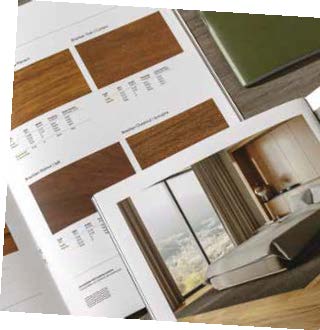
The problem usually is not the quality of individual work. A brand invests in a strong trade show presence with compelling booth design, curated room scenes, and well-trained staff. Then an architect follows up on their phone and lands on a website that hasn’t been updated in two years, with product photography that doesn’t reflect the quality on the floor. No one made a bad decision; they just made separate ones.
That architect does not call to say why they moved on. They just do. The sale disappears without explanation, and the brand never connects it back to the gap.
This happens because the physical and digital sides of a brand are often developed in isolation – different vendors, different briefs, integrated only at the end, if at all. The show, the catalog, the room scenes are the beginning of a relationship, not the relationship itself.
Without intentional follow-through at every touchpoint that follows, the connection fades. The seams are visible to customers, even when they can’t name what feels off.
BUILDING IT TOGETHER — AND KNOWING IT’S WORKING
The flooring brands getting this right do not just coordinate their channels – they develop them together, from the start, with a creative team that understands both disciplines and works in close collaboration with the client throughout. The same visual language that informs the showroom vignette shapes the product photography, the catalog design, the website experience, and the trade show environment. The brand’s tone of voice carries through from a campaign headline to the copy on a hang tag.
A common objection: this sounds expensive, or complicated, or like it requires replacing existing vendor relationships. In practice, it often is the opposite. Shared creative direction reduces redundancy, speeds up approvals, and produces assets that work harder across more channels, which means the investment goes further.
As for knowing whether it’s working: watch for the signals that precede a sale, not just the sale itself. Are leads returning to your website after a trade show? Are architects requesting samples after seeing your catalog? Is your brand being recognized across different contexts without prompting? Cohesion shows up in recognition and in decision speed – buyers who feel like they know a brand already move faster and with more confidence.
WHERE TO START
Alignment doesn’t require rebuilding everything at once:
Align before you execute. Before launching a new collection, trade show push, or campaign, bring the right people around a single brief. What is the story? Who is the audience? What should they feel and remember?
Walk your own customer journey. Experience your brand the way a first-time buyer would – visit your website, walk your showroom, look at your social presence side by side. Where does the experience hold together? Where does it fracture?
Invest in shared visual assets — once. A single, well-directed photography and room-scene library should serve print, digital, in-store, and social. Most brands reshoot for each channel; the brands that don’t reshoot are the ones whose budget goes further and whose imagery feels unmistakably theirs everywhere it appears.
The flooring brands that are winning long-term are building experiences that hold together from the first impression to the final specification. That’s not a creative achievement. It’s a strategic one. And it starts with deciding that every touchpoint deserves the same intention as the first one.
Pedro Grisotti is the partner and creative director of DZ Studio in Boca Raton, Florida. He is a creative strategist and branding director with more than 15 years of experience leading global projects across the real estate, hospitality, and surfaces industries.
