








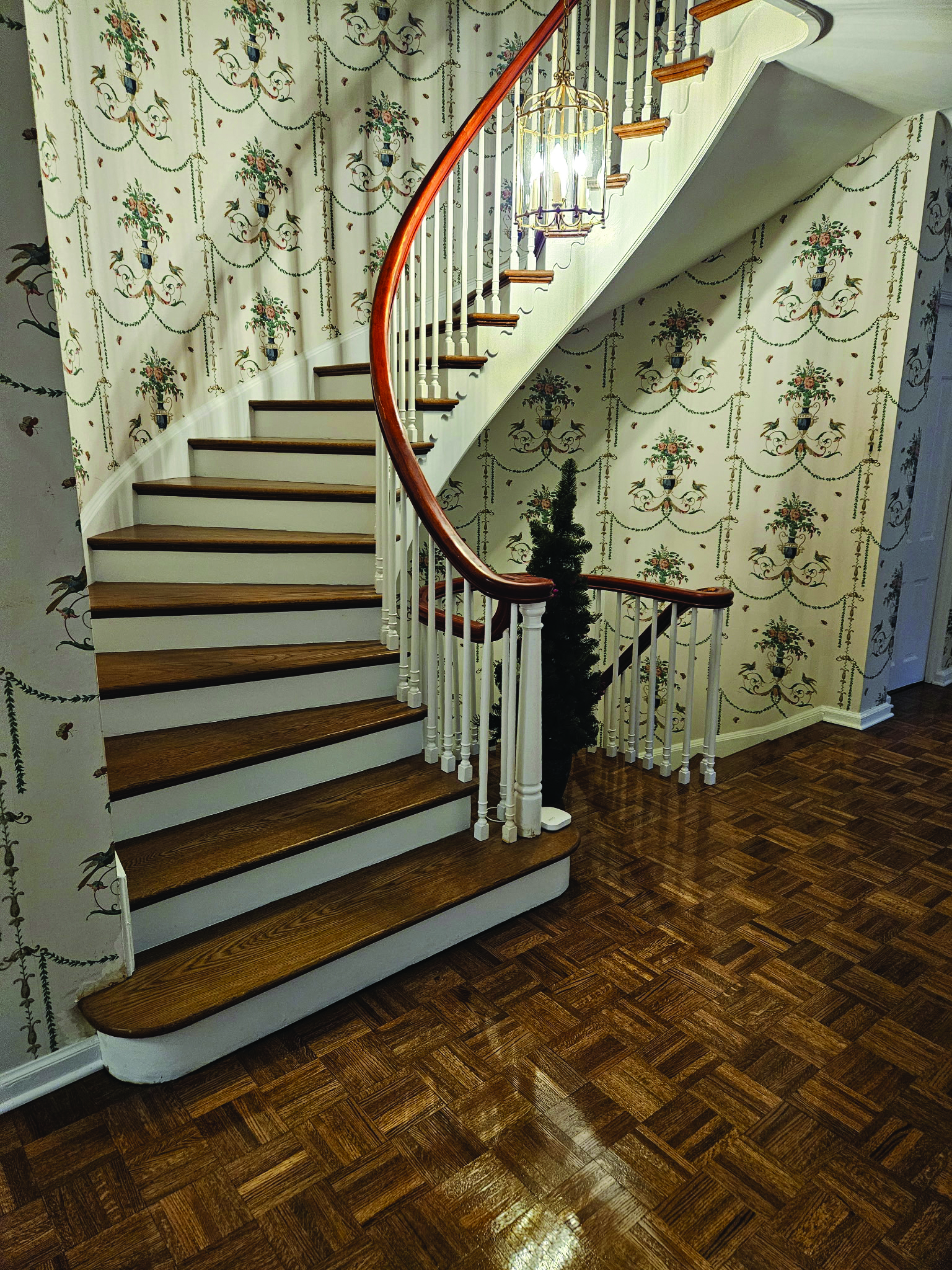
 Matching a decades-old parquet floor is challenging enough. Ensuring that floor can remain in place after hidden problems emerge is another challenge entirely. That was the situation Michael McDermott of McDermott Hardwood Flooring in Evergreen, Illinois, faced while extending the red oak parquet in a recently purchased home. What began as a project to blend new flooring seamlessly with old quickly became an exercise in problem solving, experience, and preserving one of the home’s defining features.
For the new owners of the home, the parquet floor was more than just another feature. It was one of the reasons they bought the house. Installed in the mid-1980s, the 900-square-foot red oak parquet gave the home much of its original character, and the homeowners wanted to preserve that look while extending it into an adjoining carpeted area.
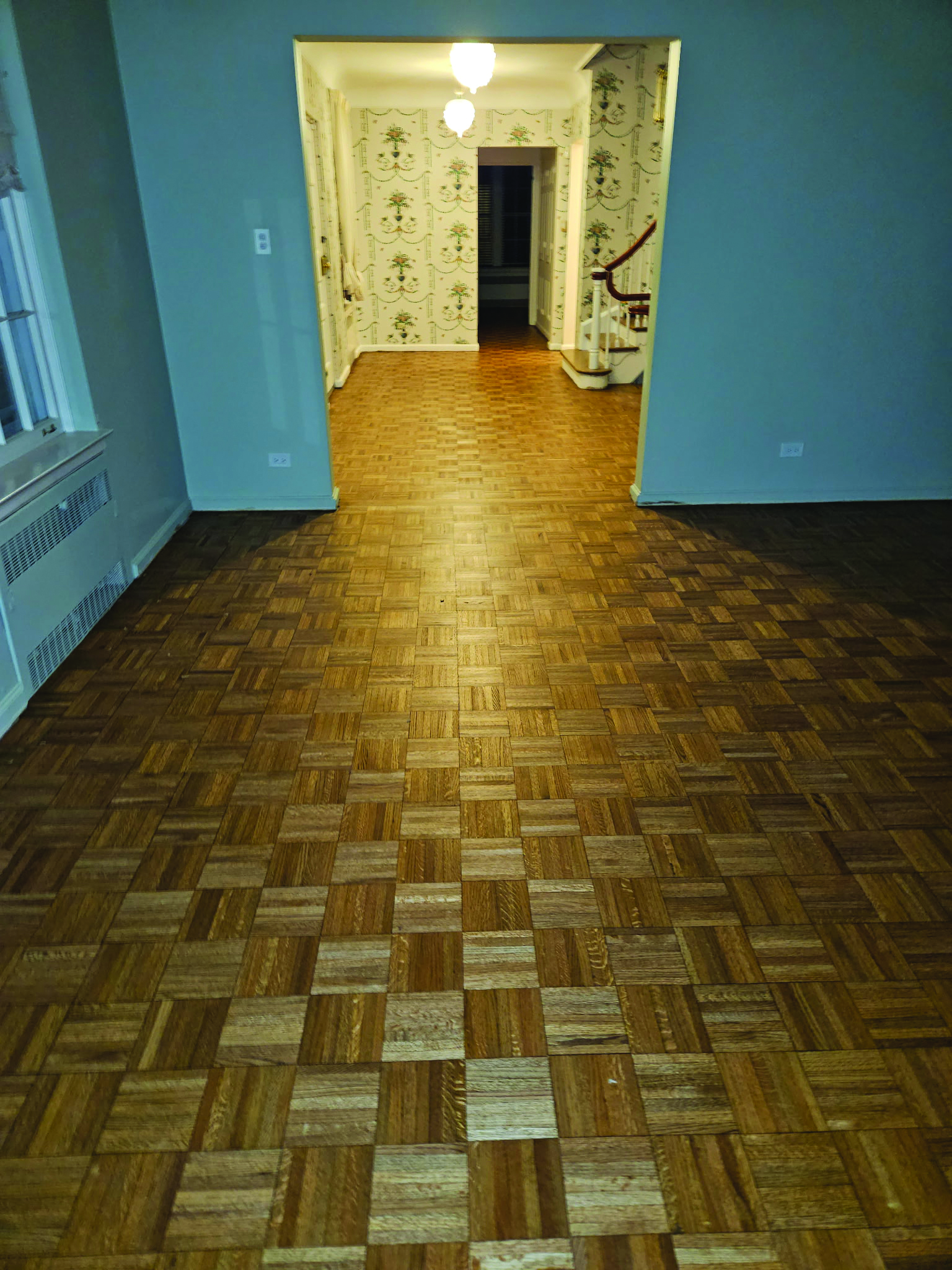
That meant finding a way to seamlessly blend 500 square feet of new parquet with flooring that had been in place for decades.
 McDermott knew the first challenge would be finding a close match. The original six-finger parquet was no longer readily available, and after searching through multiple sources, he located a manufacturer producing a nearly identical product.
“I thought another 500 feet I could probably find,” says McDermott. “I looked everywhere and finally found a broker in Texas who tracked it down. They manufacture it in Tennessee, and we had it delivered.”
The new parquet was installed over the existing concrete slab where carpeting previously had covered the floor. Before installation, the material acclimated in the home for nearly a month while other renovation work continued. Once ready, McDermott glued the new flooring in place and prepared to blend it with the original installation. The new material proved to be an excellent match, although each parquet block measured about 1/8” differently than the existing floor.
“I just started offsetting,” recalls McDermott. “By the time I got across the room, it was centered in the middle and gradually spread that difference out. Unless you are really looking for it, you don’t pick it up.”
From the outset, the homeowners had made it clear they wanted to preserve the home’s original parquet floor. “When we walked into this house, that was the thing that sold us on it,” they later told McDermott. “We wanted to keep that look.”
Just as the project appeared to be coming together, a larger challenge emerged. While sanding the original parquet, McDermott began hearing pops and crackles beneath his feet.
“As I’m sanding, I noticed a little bit of pop, a little bit of crackle,” he shares. “I’m thinking, ‘Oh no, the glue underneath is dried out and starting to fail.’”
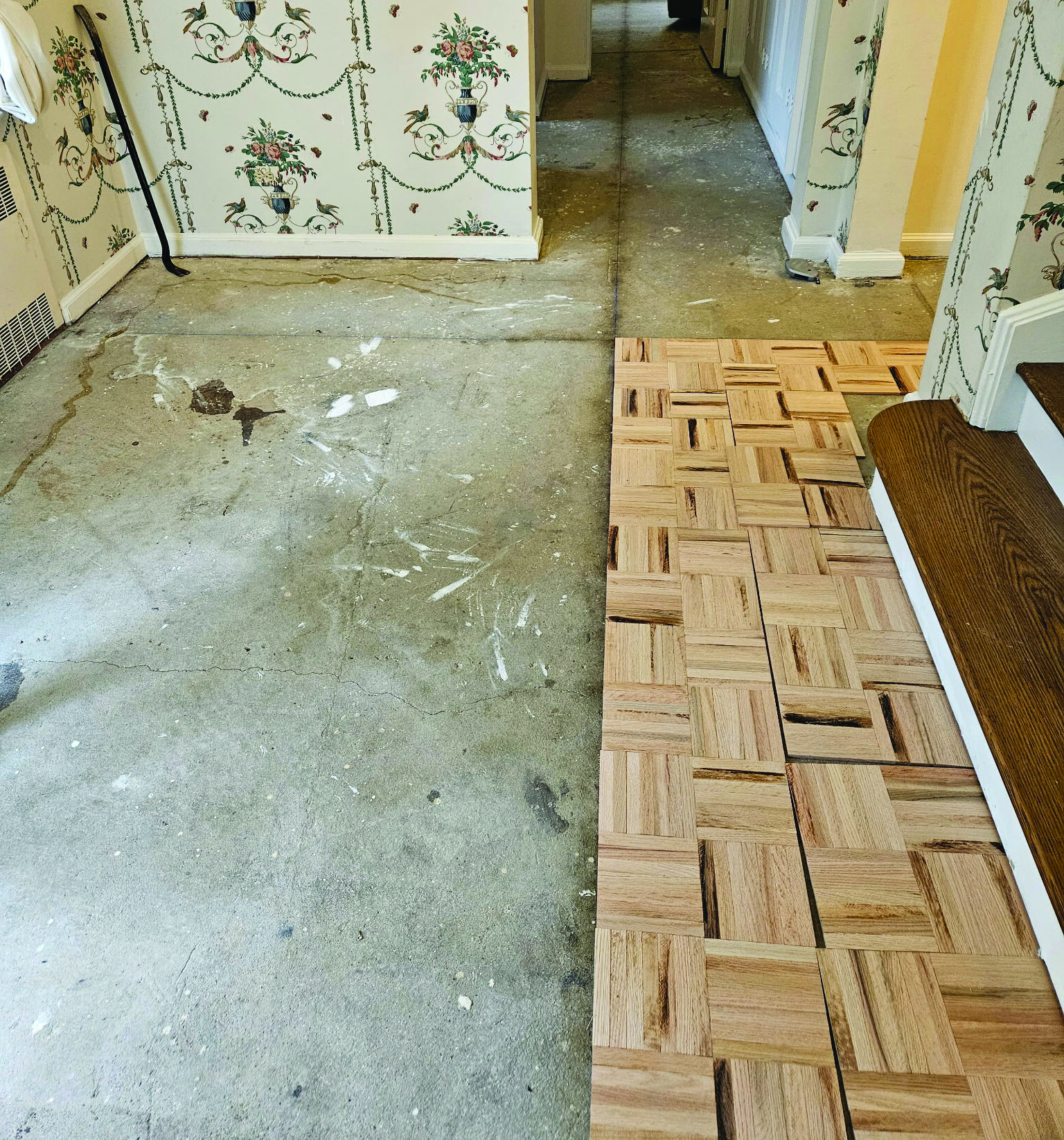 Several sections of the existing floor had begun separating from the concrete after years of service. Water intrusion from a leaking downspout also had caused localized buckling near one wall, requiring damaged parquet to be replaced using both reclaimed pieces and leftover material from the new installation.
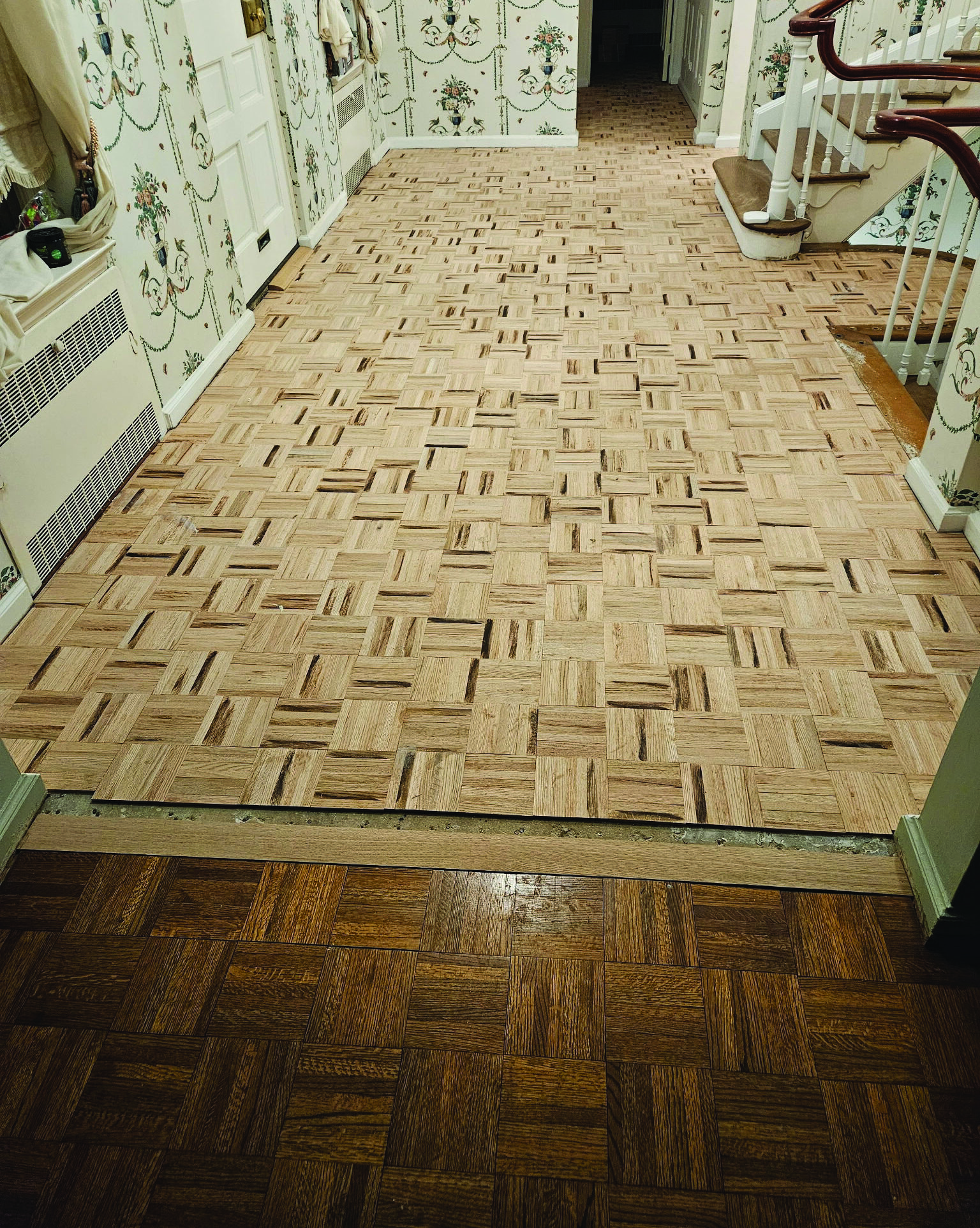 By the time those hidden conditions revealed themselves, however, the project already had moved well beyond the planning stage. The matching parquet had been located, ordered, acclimated, and installed, and the homeowners remained committed to preserving the original floor that had drawn them to the home in the first place. Replacing the entire installation would have transformed the project into something far larger than planned originally, both in scope and cost.
“The wood is already there. We have plans and everything is scheduled,” says McDermott. “I’m thinking, ‘Too late now. I can’t tell them we’re going to rip this out and replace it with something different.’”
With the project already committed to preserving the original parquet, McDermott focused on stabilizing the areas that had begun to fail. Loose sections were removed carefully and re-glued, damaged pieces were replaced where necessary, and areas that remained sound were preserved as the installation moved forward.
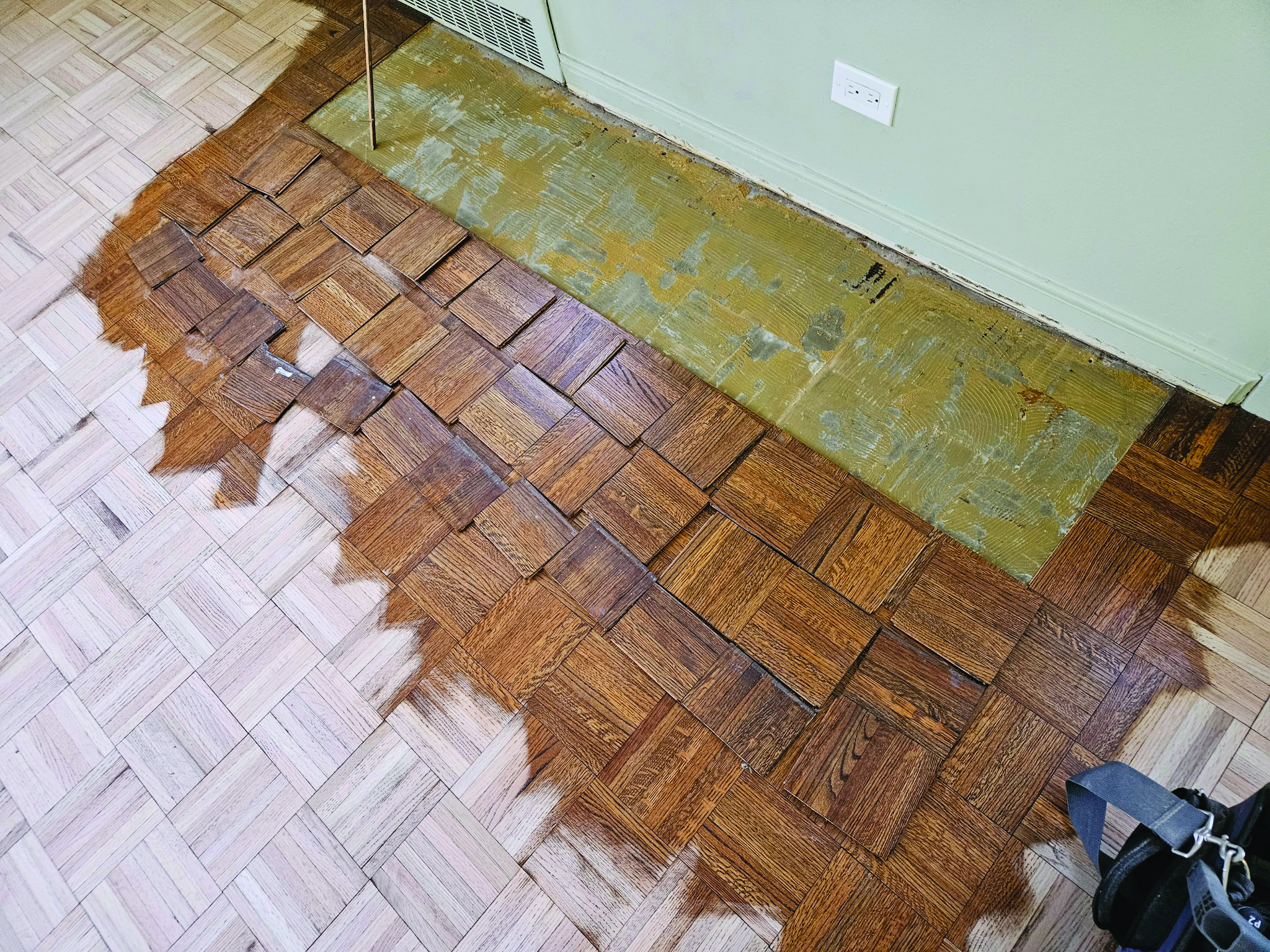 The project also presented several unexpected conditions beneath the new flooring area. Existing self-leveling compound near the staircase had to be removed to match the height of the original custom stair nosing, and an exposed electrical conduit embedded in the concrete required additional feathering to create a smooth transition without disturbing the utility line.
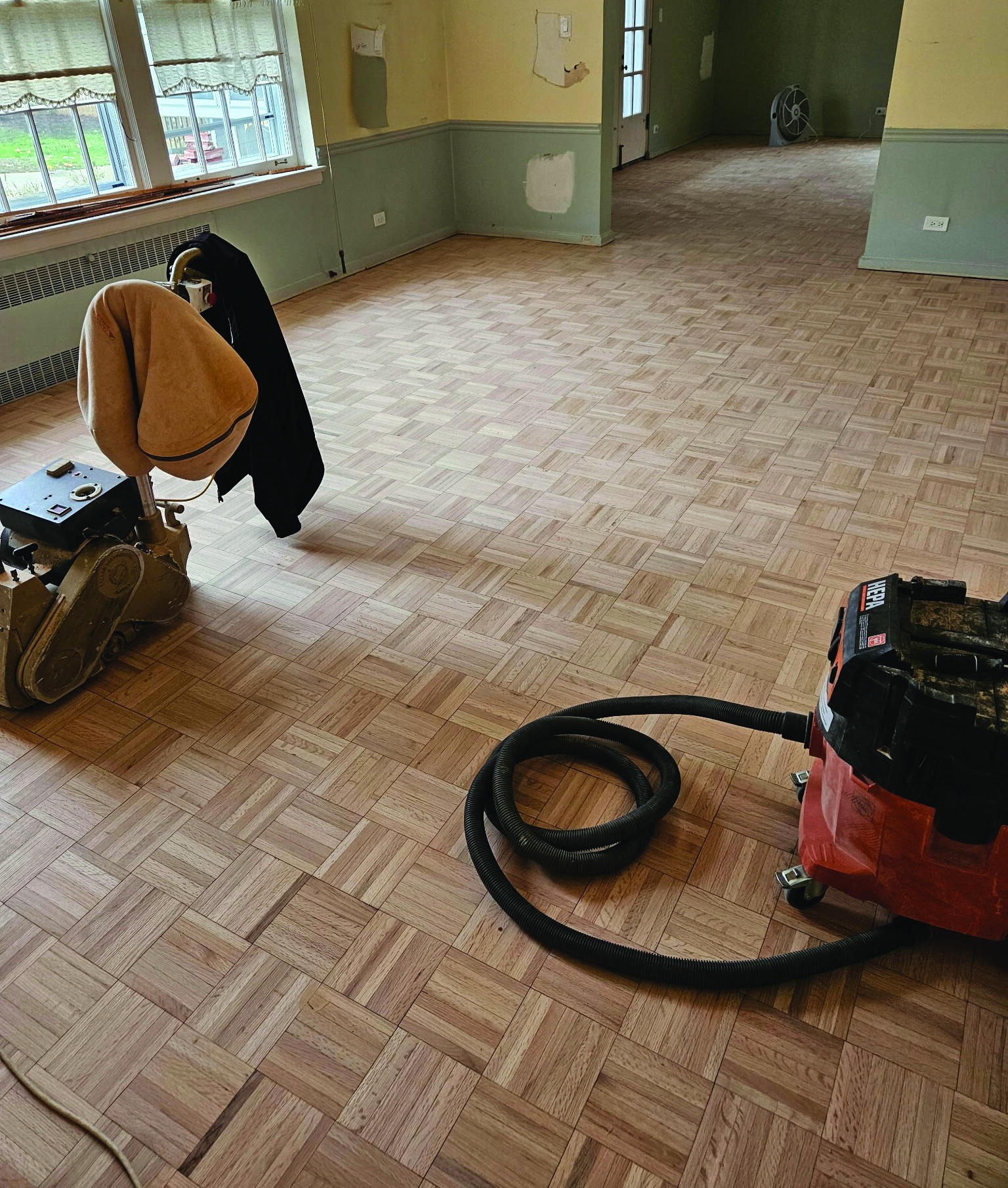 Once repairs were complete, the entire floor was sanded using a planetary machine before being water popped and stained with DuraSeal Early American. Concerned that minor movement remained beneath portions of the original parquet, McDermott made one additional decision.
“I flooded the floor with sealer,” he says. “Some of it was going to get underneath there and help stick it all together.”
The floor then received two coats of high-gloss oil-based gym finish, creating a uniform appearance across both the original parquet and the newly installed addition. Looking back, McDermott credits experience as much as technique for helping the project succeed.
“Eventually you’re going to run into issues that aren’t taught,” notes McDermott. “These are real-life situations that you don’t plan for. You take what you know and figure out a way to make it work. I’ve learned from a lot of people over the years, and I’ve tried to take the best of what they have taught me and make it my own.”
