








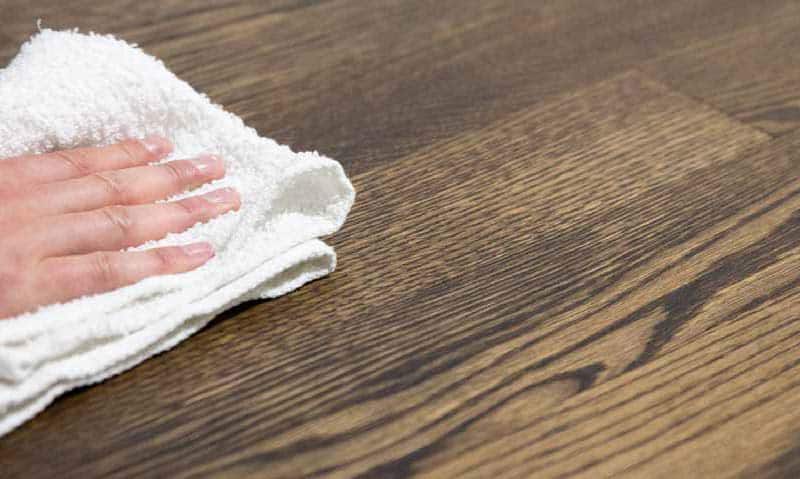
 Wood furniture, cabinetry, and flooring all originate from the same fundamental material, yet the way each must be maintained varies significantly. Their location in the home, the stresses they encounter, and the finishes applied to them create distinct maintenance requirements. For both professionals and homeowners, understanding these similarities and differences is essential for protecting long-term performance and appearance.
SHARED MAINTENANCE PRINCIPLES
Despite their different uses, all wood surfaces respond similarly to environmental
conditions. The most important universal factor is moisture. Wood is hygroscopic, meaning it absorbs and releases moisture based on its surroundings. Excess water – from spills, wet cleaning, or humidity swings – can lead to warping, swelling, staining, and finish failure. Any
spill should be wiped up immediately, and standing water must be avoided on all wood surfaces.
Closely tied to moisture is the need for stable indoor climate control. Maintaining consistent relative humidity helps prevent cupping, gapping, cracking, and other dimensional changes.
Both flooring and furniture benefit from an environment that avoids extreme dryness or excessive humidity, which can stress wood fibers and compromise finishes.
Another shared principle is the avoidance of harsh or abrasive cleaning methods. Strong chemicals, scouring pads, and excessive water can damage both the finish and the wood beneath. Whether cleaning a dining table or a hardwood floor, recommended cleaners and soft cloths, mops, or pads are essential.
Finally, many wood products – especially those made from solid wood – can be refinished. Sanding and refinishing can remove scratches, restore worn surfaces, and refresh
the appearance. However, this is far more feasible on solid wood than on
veneered furniture or engineered flooring with thin wear layers. Veneers
and thin wear layers limit how many times sanding can be performed before structural integrity is compromised.
KEY DIFFERENCES IN MAINTENANCE NEEDS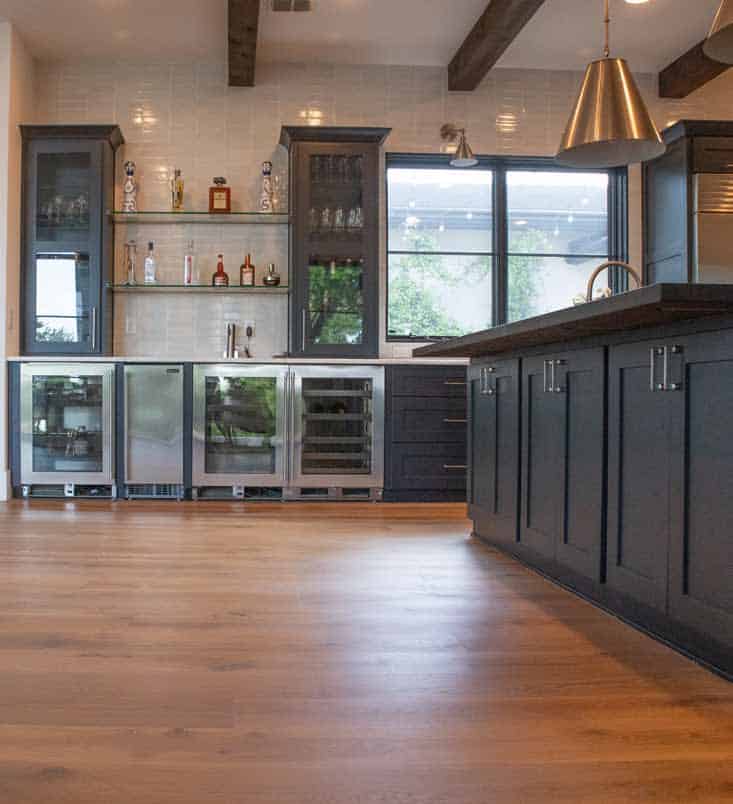
Although the foundational principles overlap, the day-to-day maintenance of wood flooring versus furniture and cabinetry differs because each surface experiences unique types of wear.
Types of Wear
Wood flooring experiences some of the most intense physical stress in the
home. Foot traffic, dirt, and grit tracked in from outside, pet claws, and moving
furniture all contribute to scratches, dents, and abrasion. Dropping heavy
objects can cause dents and gouges, and dragging furniture can leave deep marks.
Floors must withstand constant vertical pressure and friction.
Furniture and cabinetry, on the other hand, experience lighter but more varied wear. Kitchen cabinets may accumulate grease, fingerprints, and steam exposure. Furniture may
develop minor dings, spills, or UV fading. The wear typically is more localized and less abrasive than what floors endure.
Cleaning Requirements
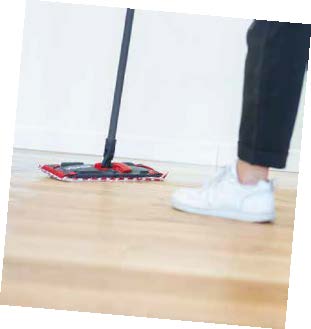
Because flooring collects dust, dirt, and debris continuously, it requires more frequent cleaning. Regular vacuuming or sweeping prevents grit from scratching the finish. Damp mopping (using minimal water and recommended floor cleaners) helps maintain cleanliness without damaging the wood or its finish.
Furniture and cabinetry generally require less-frequent cleaning. Dusting, occasional wiping with a damp cloth, and using appropriate cleaning products usually are sufficient. Excessive moisture especially is problematic for cabinetry near sinks or dishwashers, where steam and splashes can degrade finishes over time.
Protection Strategies
Protection methods also differ. For flooring, prevention focuses on minimizing abrasion and
impact. Area rugs, entry mats, and felt pads under furniture legs help reduce wear. Homeowners are encouraged to avoid walking on floors with highheeled shoes or cleats and to lift and carry rather than drag heavy items.
Furniture and cabinetry require different forms of protection. Heat and steam are major concerns – particularly for kitchen cabinets near stoves, ovens, or dishwashers. While furniture can be scratched, the risk generally is lower than for flooring. Trivets, coasters, placemats, tablecloths, and protective pads help preserve the finish and prevent heat or moisture damage.
Material Choices
The wood species and construction methods used for flooring versus furniture also influence maintenance. Flooring typically uses harder wood species – such as oak, maple,
or hickory – or engineered products designed to withstand foot traffic. Softer woods dent more easily and require more careful maintenance.
Furniture and cabinetry often may use softer woods chosen for their appearance or workability, such as pine, alder, or decorative plywood veneers. These materials may be more sensitive to impact but are less exposed to abrasive forces.
Finish Types
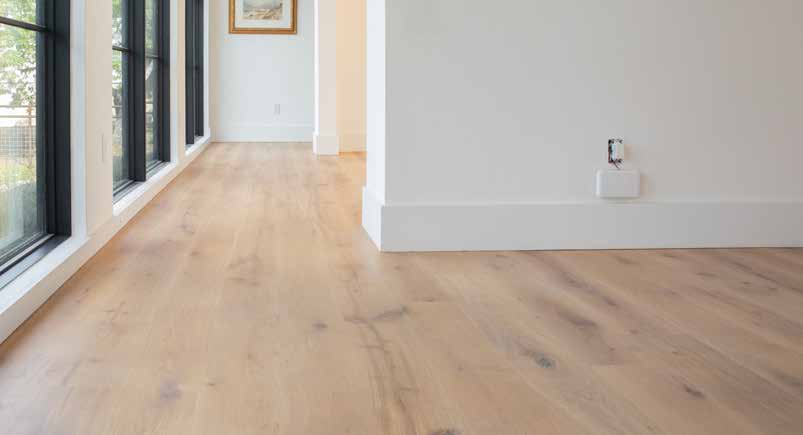
Finishes differ significantly between the two categories. Wood flooring commonly uses
high-durability, traffic-rated finishes such as polyurethane, hardwax oils, or penetrating oils.
These finishes are engineered to withstand abrasion and repeated cleaning.
Furniture and cabinetry finishes vary widely. They may include precatalyzed lacquers, conversion varnishes, paints, oils, or waxes. These finishes prioritize appearance and feel and are not designed for the same level of physical stress as floor finishes.
REPAIR AND REFINISHING CONSIDERATIONS
Repairing or refinishing wood surfaces depends heavily on the type of finish. Filmbuilding finishes, such as polyurethane or lacquer, are difficult to repair in isolated spots. A small repair often stands out, requiring the entire surface to be recoated for a uniform appearance. For furniture and cabinetry, this often means spraying finishes in controlled environments to avoid overspray and achieve a smooth result.
Hardwax oils and penetrating oils offer more flexibility. Because they soak into the wood rather than forming a thick film, spot repairs usually are easier and less noticeable. This makes them appealing to contractors or homeowners who prefer simpler maintenance and repair options.
Johannes Boonstra is senior technical manager for Rubio Monocoat
USA. He can be reached at johannes@rubiomonocoatusa.com.
