








 I was called to inspect a new prefinished engineered white oak floor for possible insect issues in Cupertino, California. The photos provided showed two small holes in the oak planks and what looked like small black larvae near them. They thought there was an issue with the new floor they purchased. This was in a newly remodeled home that partially was furnished and had part-time occupancy during the construction project.
The flooring was installed in most of the main floor of the home. I found two <1/8”
fairly clean holes in the dining room area. I used a tool to penetrate the holes to see if
they went into the subfloor and if I could get any other evidence. It appeared the holes
were only in the oak flooring through the entire 5/8” thickness. With a macro photo lens,
I could see the finish around the hole appeared fractured and jagged like something had
broken through it.
The homeowner had put clear scotch tape over a group of what appeared to be black
larvae. I took photos, but couldn’t see any current insect activity.
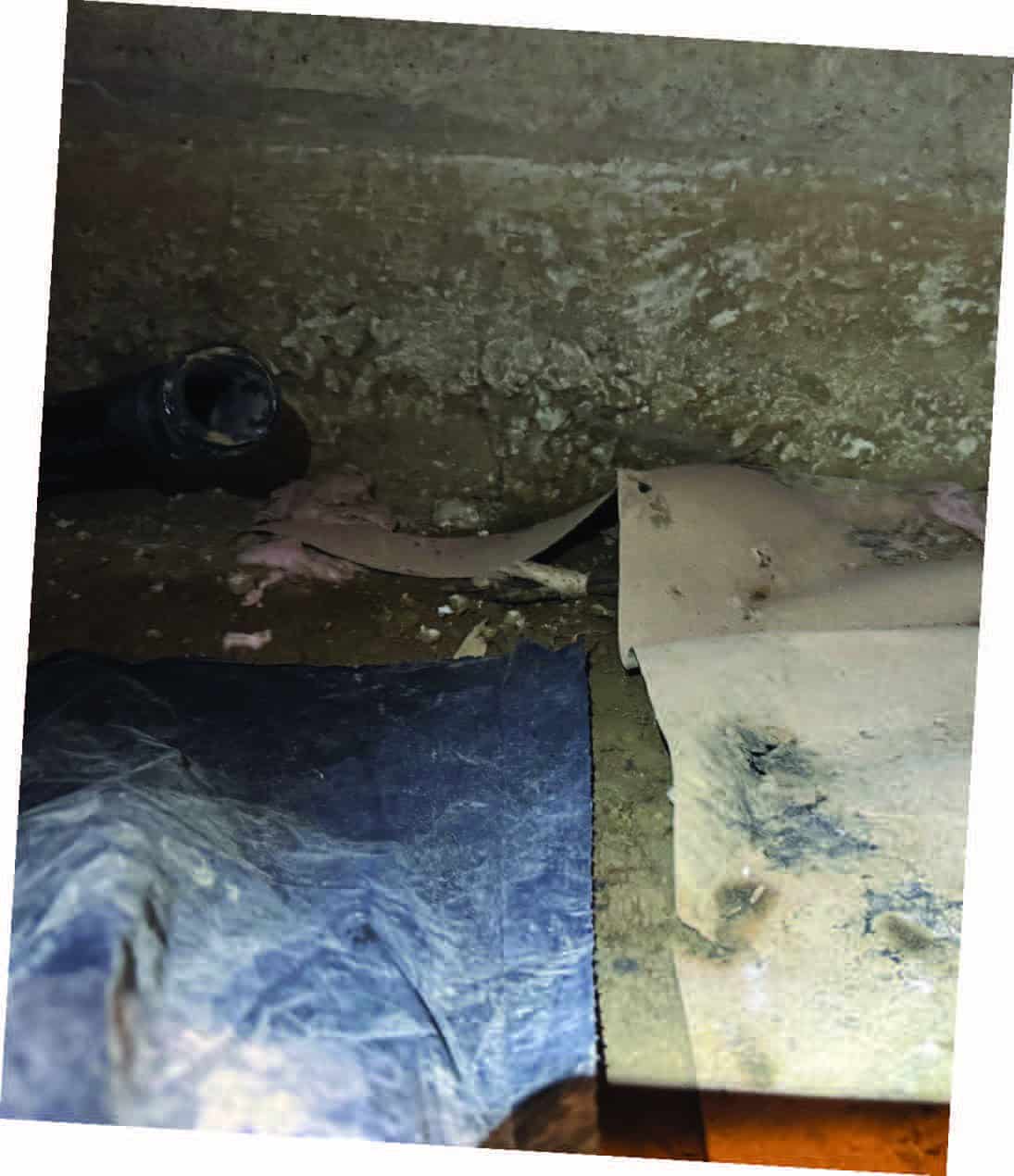
I was able to inspect a small section of the crawl space under the floor area near the holes. There was no moisture barrier other than smaller pieces of old plastic lying on the wet dirt. I also could smell mildew. I informed the homeowner that the issue needed attention. I could not see any insect activity in the limited area of the crawl space I could get into.
I conducted the site inspection and told him without seeing the actual insect, I could not determine exactly what was occurring. I shared with him the section on insect issues in NWFA’s Problems, Causes and Cures publication, which focuses mainly on powderpost
beetles and, in some instances, termites. I suggested they watch for insect activity and perhaps get a pest control company to examine the site. Often, insects found in wood flooring are introduced to the material after they leave the manufacturer, as they would otherwise not survive the kiln drying process.
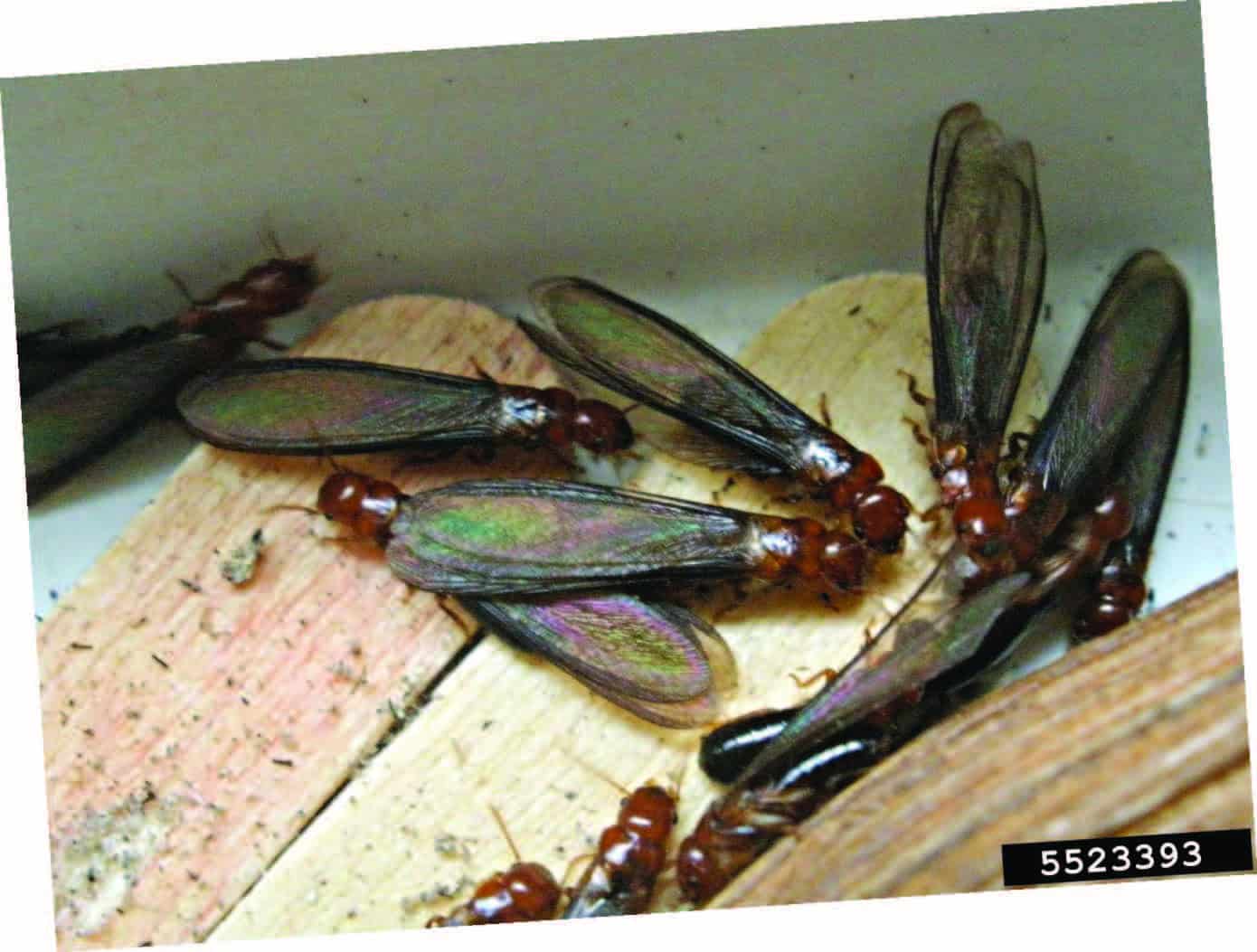
Several days later, he said they found active insects emerging from the holes and provided photos of the bugs they put into a clear bag, confirming their presence. I’m not an insect expert, but it didn’t look to me like a powderpost beetle, and there was no powder dust around the holes usually seen with these beetles.
I enlarged the photo on my phone and used a bug ID app to get some idea of the type of insect. It gave me two descriptions, both termite species.
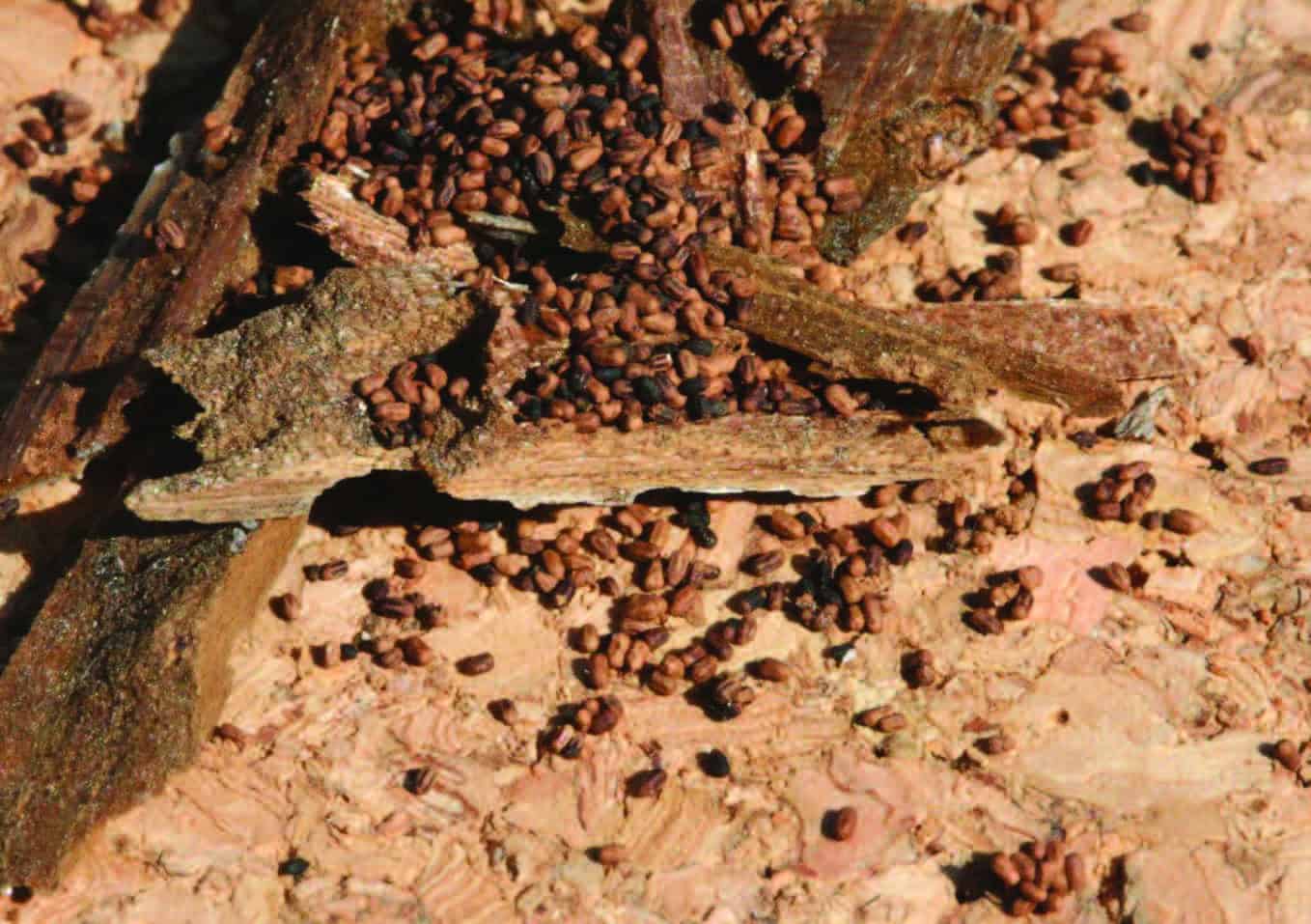
I reached out to a local University entomologist and sent him the enlarged photo of the insect. They determined it was a smaller species of termite with the exact scientific name as one identified on my phone app! They stated: “Your photos show the distinctive fecal pellets
and an alate ‘swarmer’ of the western drywood termite, Incisitermes minor. Swarmers only are produced by mature colonies (at least five years old), suggesting that this infestation
was present before installation of the ‘new floor,’ perhaps within the subfloor.” So, these termites likely are not found in new wood. They take time to fully develop, meaning the issue most likely was present before the wood flooring was ever brought to the site or installed.
The homeowner had a pest control expert inspect the house’s structure, confirm the type of insect, and suggest aggressive termite treatment.
Bryan McCue is an NWFA Certified Wood Flooring Inspector and the owner of Floorensiks by Craftcare Inspections in San Rafael, California. He can be reached at craftcare.net or 415.453.6330.
