








What is Hysteresis?
 In 2021, I joined the NWFA. This was a decision that was built out of frustration from issues occurring on jobsites which usually involved distributor reps coming out to jobsites to tell me how I had incorrectly installed the flooring. At this point, I had been installing wood floors (on and off) since 2011. But I knew I needed to relearn the basics, so at the very least, I would have a leg to stand on when jobsite issues arose and to answer lingering questions I had about things that I was seeing in the field. Among the most recurring of these questions revolved around why every aged floor that I saw had gaps that aren’t closing, regardless of the time of the year.
The evolution of acclimation methods
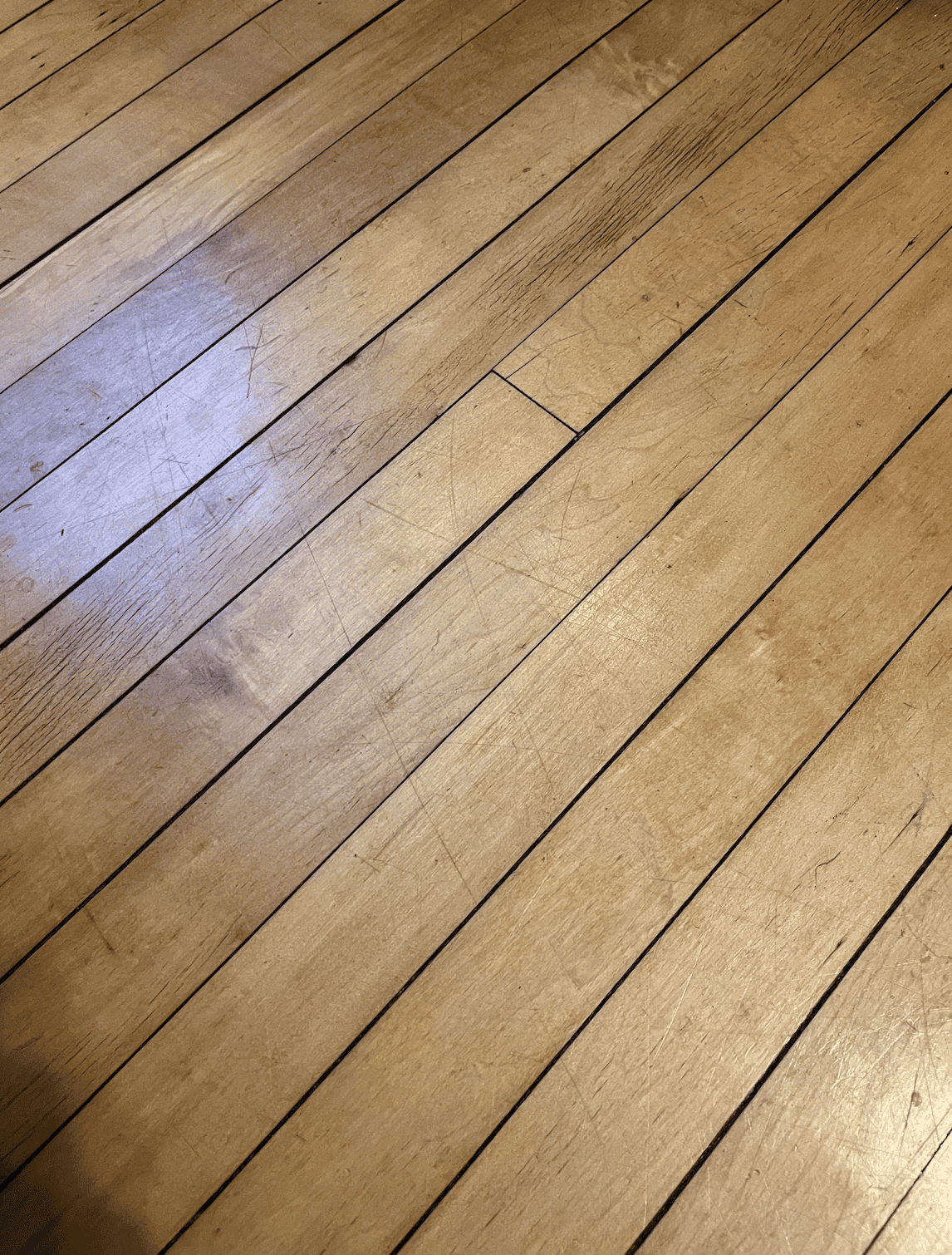 In full disclosure, I don’t know the exact history of how acclimation was done in the early days of twentieth century, but based on the 1907 maple floor in my own home, my guess is that it was not.
There are some common methods for acclimation that I’d like to address here:
The first is the “leave the wood in the house for seven days prior to installation and you will be good” method. I would say that today, among non-NWFA members, this is still the most pervasive method for acclimation. The problem is that if the house is not within normal living conditions during that period of time, you could be installing the floor too dry or too wet, leading to either gapping or cupping. It also does not take into account your starting point for acclimation.
The next is the “wait until the wood reaches its equilibrium moisture content (EMC)” method. This method is an extension of the seven-day acclimation method. Instead of putting a timeframe on how long the wood needs to be acclimated, this method brings the wood to the existing conditions inf the home for as long as it takes for the wood to be neither gaining nor losing moisture. This is a better method, but like the seven-day method, if you are not acclimating at a normal range of conditions for what the house will be kept at, you will easily run the risk of either permanent gapping or cupping depending on the time of year that you are acclimating. (Can any new construction installers in the Dallas Fort Worth DFW area relate?)
Then there is the “acclimate the flooring to the dead center of the expected range of living conditions” method. This method involves getting the house to the dead center of expected living conditions (somewhere in between the most humid time and the driest time of the year) and then acclimating the floor within those conditions until the wood has reached EMC. This method allows for both expansion during the humid months and contraction during the dry season. However, if following this method, you may still end up with small gaps because it doesn’t account for hysteresis.
What is Hysteresis?
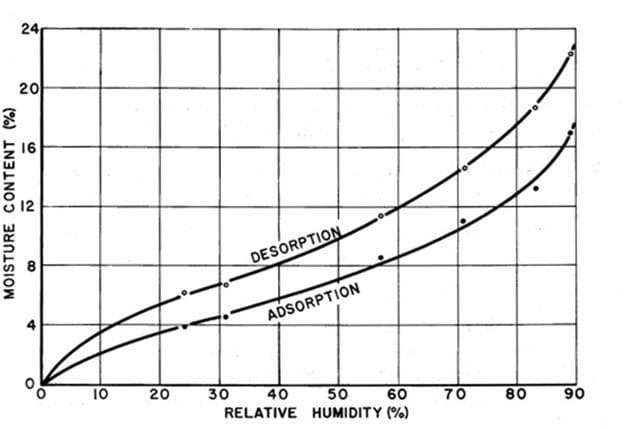
NWFA Wood Flooring Installation Guidelines define hysteresis as “The phenomenon in which the value of a physical property lags behind changes in the effect causing it. In wood, the EMC that wood attains at any given relative humidity and temperature combination depends upon many variables, including the direction from which the EMC is approached. During desorption (moisture loss), the EMC will be higher (sometimes by several percent moisture content) than during adsorption (moisture gain).” Refer to the chart within this article. In plain speak, this means if you acclimate a floor to a temperature of 70F degrees with an RH of 40 percent, the wood’s MC should be around 7.7% (based on the EMC chart). When that wood then goes through the dry season, it will lose moisture. During the following humid season, a much higher RH than 40 percent will be required to get the floor back to the same width the floor planks were at during installation. In the chart, the same moisture content would only be achieved during adsorption at a relative humidity of 58 percent. This is significant!
The Bottom Line
There are many things to factor into the chosen relative humidity at which you will acclimate your floor. Things such as expected living conditions, width of plank being used, and whether the floor will be glue assisted,just to name a few. Undoubtedly, hysteresis is something that needs to be considered when coming up with acclimation procedures if you want to try to avoid gapping in your floor. If you have more questions on acclimation, check out NWFA’s Wood Flooring Installation Guidelines’ acclimation and conditioning section.
A big thanks goes to the late, great Gene Wenegert who first exposed me to this topic at the NWFA Expo Symposium in Milwaukee and also took my phone calls after that time to help further explain this topic.
Ryan Jazdzewski is the owner of Jazz Custom Wood Flooring in Burlington, Wisconsin, and an NWFA Certified Installation Professional, Certified Sand and Finish Professional, and Certified Wood Flooring Inspector. He can be reached at jazzflooringco@gmail.com.