









Unless your company operates using a cash-ondelivery model, the primary source of income your business receives most likely will come from paid invoices. Any delays, inaccuracies, or other issues that affect the payment of these invoices can cause a potentially substantial impact to your bottom line. To keep your business income stream smooth and consistent, you need effective accounts receivable management.
Simply put, accounts receivable represents money owed to your business for goods or services already delivered. Accounts receivable is essential because it supports liquidity and cash flow, reflects customer payment reliability and risk exposure, and impacts working capital that powers business expansion. Regardless of the system used to track accounts receivable, several best practices should be followed consistently and routinely to ensure your accounts receivable process operates effectively for your business.
ESTABLISH CLEAR CREDIT AND PAYMENT POLICIES
Before any goods are delivered or services are performed, you need to have a clear set of policies regarding how and to whom you offer credit. These rules should be clear, written, and easy to find by including them in contracts, estimates, and invoices. These policies should address payment terms, accepted payment methods, any required upfront deposits, late penalties or interest, and credit limits for repeat customers.
INVOICE CUSTOMERS PROMPTLY
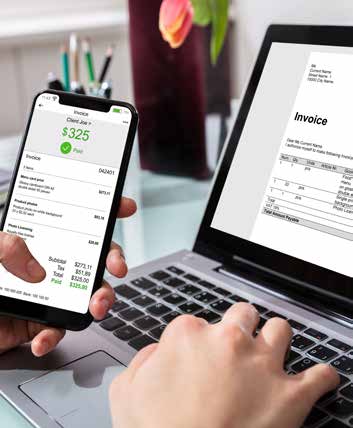
Make sure to send out invoices to your customers as soon as possible after service or delivery. To avoid errors that could delay payment, use a standard invoice template that includes all the required details, including invoice number and date, due date, itemized charges, taxes, and the total amount due. If possible, use accounting or invoicing software to automate the process. Not only will this speed up the invoicing process and reduce errors, but it will also allow you to track your outstanding receivables as well.
MAKE INVOICE PAYMENT CONVENIENT
The more payment options a customer has, the more likely they are to pay their invoice on time. If possible, consider accepting multiple payment methods, such as credit and debit cards, ACH bank transfers, wire transfers, online payment portals, or mobile payment options. If you can, include a payment link with any electronic invoices you send.
MONITOR ACCOUNTS RECEIVABLE
To manage your accounts receivable, you need to monitor your receivables balance regularly using an accounts receivable aging report. This will allow you to identify overdue accounts and follow up before problems escalate. If you are interested in taking an in-depth look at collection efficiency, there are a couple of metrics you can calculate to track these variables. These two metrics are the receivables turnover ratio and the days sale outstanding (DSO).
The receivables turnover ratio shows how often a business collects its outstanding receivables within a given period and is calculated by dividing net credit sales by the average accounts receivable balance. A higher turnover rate means a more efficient collection process and better credit risk management.
DSO measures the average number of days it takes a business to collect a payment after a credit sale. The DSO is determined by taking the average accounts receivable balance divided by net revenue, then multiplying that result by 365. A lower DSO means faster collections and less cash tied up in receivables. Maintaining a low DSO increases cash flow and can reduce reliance on external financing.
CREATE A COLLECTIONS PLAN
Small businesses may hesitate to follow up on overdue invoices because of concerns about damaging customer relationships. However, professional and consistent follow-up can strengthen relationships by reinforcing clear expectations. Develop a systematic collections plan with clear steps and timelines for follow-ups, including reminder emails and phone calls. Keep all communication professional, factual, and respectful.
DISCOUNTS AND FINANCE CHARGES
To incentivize prompt payment, consider offering discounts to customers who pay their invoices early. Conversely, implementing a finance charge for delinquent payments can help to offset the costs associated with delayed cash flows. Make sure to clearly communicate both policies to your customers so they understand the benefits of paying on time. Effective accounts receivable management is about being organized, proactive, and professional. When done well, it can help support sustainable long-term growth and success for your business.
Dana Rogers is CFO of the National Wood Flooring Association (NWFA) in
St. Louis, Missouri.She can be reached at dana.rogers@nwfa.org.
